Technical Editor Clay Gordon recently visited a factory in Ecuador and takes us through scaling down chocolate production.
One of the attractions of becoming a craft chocolate maker is that start-up capital costs can be quite low compared with many other businesses. Setting aside business formation and related build-out, licensing, and marketing costs, all that is required is a means for roasting, cracking and winnowing, grinding, refining, tempering, some moulds, some beans and sugar (and maybe some optional ingredients), and wrapping materials.
A bare bones setup (not considering ingredients) can cost as little as US$2500 to test the waters at a hobbyist level while taking advantage of what are called “cottage food” laws here in the US. These laws, which I simplify here, make it possible (in many states) to make food products for direct sale (at farmers’ markets, for example), in a home kitchen that has been inspected. Not allowed under cottage food laws is selling to wholesalers or direct to retailers; that requires using a licensed and inspected facility outside the home.
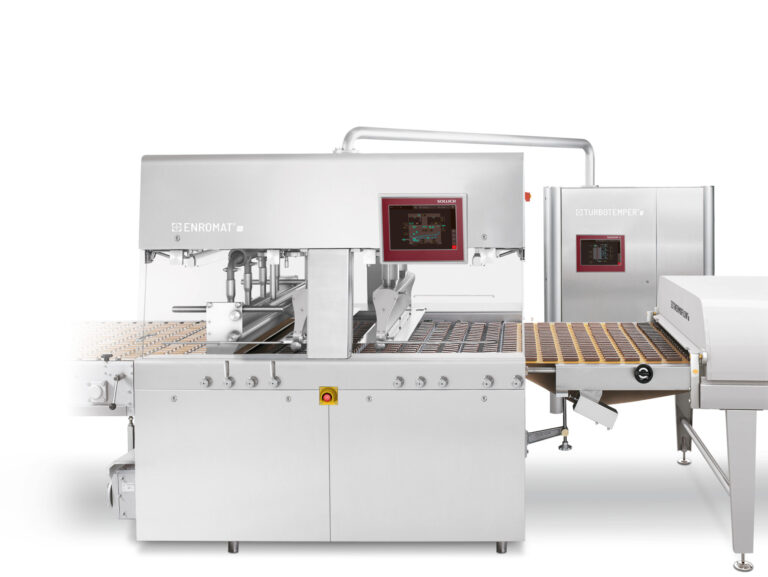
There are many ways to scale into larger production and the most popular for small craft chocolate makers is to upsize the roaster, get (sometimes DIY) a larger cracker and winnower, add more of the same size melangeurs and/or get larger ones, and move from hand or batch tempering and hand-depositing the chocolate into moulds to a continuous tempering machine with depositing capabilities. Depending on how much additional production is needed, these upgrades can cost from under US$10,000 to well over $35,000 or more, in part depending on the DIY skills of the maker as well as on the availability of used equipment. It’s also possible to grow modularly and incrementally, adding new capacity only in areas where, and as, capacity constraints appear.
For most craft chocolate makers, the primary mode of production is always going to be batch oriented, not continuous production. While there are many differences between batch and continuous production, from an equipment perspective the most important difference is in materials handling – how do beans get into the roaster and from there to the cracker and then to the winnower and then the nibs to the refiner, and so on.
In batch-oriented production, all of the materials transfer is done by hand using bags and bins and buckets. Beans are removed from a bag and inspected/cleaned by hand. Acceptable beans are scaled (weighed) into containers in batches that are sized to the roaster. Roasted beans, after cooling, are put into another container and then hand fed into the cracker which sometimes, but not always, feeds directly into the winnower…
To read more see our latest issue here.
Media contact
Caitlin Gittins
Editor, International Confectionery
Tel: +44 (0) 1622 823 920
Email: [email protected]