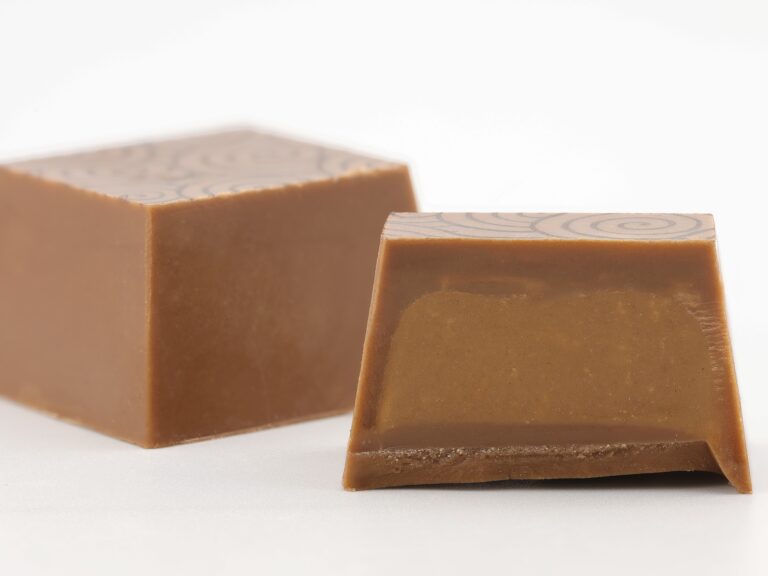

Senior Editor Joseph Clarke explores the fortified and functional additives reshaping confectionery – from sugar reduction and micronutrient stability to taste masking and clean label innovation
A noticeable shift towards “permissible indulgence” is reshaping product development across chocolate, gummies and sugar confectionery. Consumers are increasingly seeking products that offer more than sweetness – whether that means added protein, fibre, collagen, vitamins or botanicals – without sacrificing the sensory experience that makes confectionery distinctive.
This evolution is being driven by several converging pressures. Heightened awareness of sugar consumption, combined with HFSS regulations in markets such as the UK, has accelerated reformulation efforts and encouraged manufacturers to rethink the role of sweets within a balanced lifestyle. At the same time, wellness trends have normalised the idea of functional foods, creating space for confectionery to act as a delivery system for targeted benefits. Gummies fortified with vitamin D, zinc or B-complex blends for immunity and energy are now firmly mainstream, while fortified chocolate and medicated lozenges continue to blur the line between treat and supplement.
Industry data suggests this shift is widespread. According to ingredient specialist BENEO, 73% of global consumers say they would like healthier options in traditionally indulgent food and beverage categories, while 61% consider low sugar content to be the most important attribute.
“Consumer perception of indulgence has shifted from excess towards quality, moderation and better-for-you options,” explains Karel Thurman, Portfolio Director at BENEO. “Indulgence is still about enjoyment and mood lifting, but healthy snacking has become much more mainstream. While taste remains key, especially in traditionally indulgent categories like confectionery, consumers are increasingly paying attention to ingredient labels and looking for products that deliver added nutritional value.”
Ingredient suppliers are responding to this demand with increasingly sophisticated micronutrient and bioactive solutions. Companies such as DSM-Firmenich and BASF are supporting the growth of vitamin- and mineral-enriched confectionery, addressing not only efficacy and stability but also regulatory compliance in a landscape where health claims differ significantly between the EU and other global markets. Ensuring accurate dosage, maintaining nutrient integrity through processing, and substantiating on-pack claims are now central considerations during formulation.
Beyond vitamins, fibre and botanical extracts are gaining traction, particularly as digestive health and immunity remain priority areas for consumers. Nexira, for example, has seen growing interest in prebiotic fibres and plant-derived actives that enable confectionery to support gut health positioning while contributing to reduced sugar formulations. Adaptogens and collagen inclusions further illustrate how confectionery is adopting cues from the nutraceutical and sports nutrition sectors.
Sugar reduction remains one of the most significant drivers of this shift. However, reformulating confectionery is rarely straightforward, given the functional role sucrose plays in sweetness, bulk, colour formation and texture.
“Sugar reduction is not simply about replicating sweetness,” Thurman notes. “Consumers still expect the same creamy mouthfeel, crunchy bite or fluffy structure that they associate with traditional treats. Ingredients that replace sugar therefore need to provide similar functionality within the food matrix, or be supported by other ingredients that deliver those structural properties.”
Solutions such as BENEO’s Isomalt, a sugar replacer derived from sugar beet, illustrate how functional ingredients can help manufacturers address these challenges. With roughly half the calories of sucrose and a mild, sugar-like sweetness profile, it offers advantages in applications such as hard candies and chewing gum.
“Isomalt absorbs virtually no moisture, which improves the crunchiness of coated applications such as chewing gum and contributes to colour brilliance in coatings,” says Thurman. “In candies and lollipops it helps create smooth surfaces, avoids sharp cracks and can contribute to improved shelf life.”
Demographic targeting is also shaping innovation. Energy-boosting formats aimed at younger consumers, cognitive-support products positioned for busy professionals, and immunity-focused gummies for families all demonstrate how confectionery is increasingly segmented by functional need state rather than flavour alone. As a result, the boundary between confectionery and nutraceutical continues to soften. For manufacturers, this represents both opportunity and complexity: the challenge lies in delivering targeted benefits within regulatory frameworks while preserving the indulgent character that defines the category.
How Do Functional Additives Behave?
If the commercial narrative around functional confectionery is compelling, the technical reality is considerably more complex. Unlike bakery or dairy applications, confectionery systems are highly sensitive to small formulation changes. Sugar concentration, water activity, fat crystallisation and rheology are finely balanced – and the introduction of vitamins, proteins or fibres can quickly destabilise that equilibrium.
One of the primary challenges lies in thermal processing. In hard candy and gummies, cooking temperatures can exceed 120°C, while chocolate manufacture involves extended conching phases under controlled heat. Certain vitamins and bioactives are heat-sensitive, requiring careful consideration of when and how they are added. Premature addition may result in degradation and reduced efficacy; late-stage incorporation, meanwhile, raises questions around dispersion and homogeneity. Achieving accurate dosage per serving is non-negotiable, particularly in fortified products positioned around immunity or cognitive support.
Moisture presents another critical variable. Many functional ingredients – including some fibres and plant proteins – are hygroscopic. In hard-boiled sweets, even minor shifts in moisture migration can affect glass transition, leading to stickiness, surface crystallisation or reduced shelf life. In gummies, water activity must be tightly controlled to maintain microbial stability while preserving texture. Functional powders can alter water-binding dynamics, softening gels or accelerating staling if not correctly balanced.