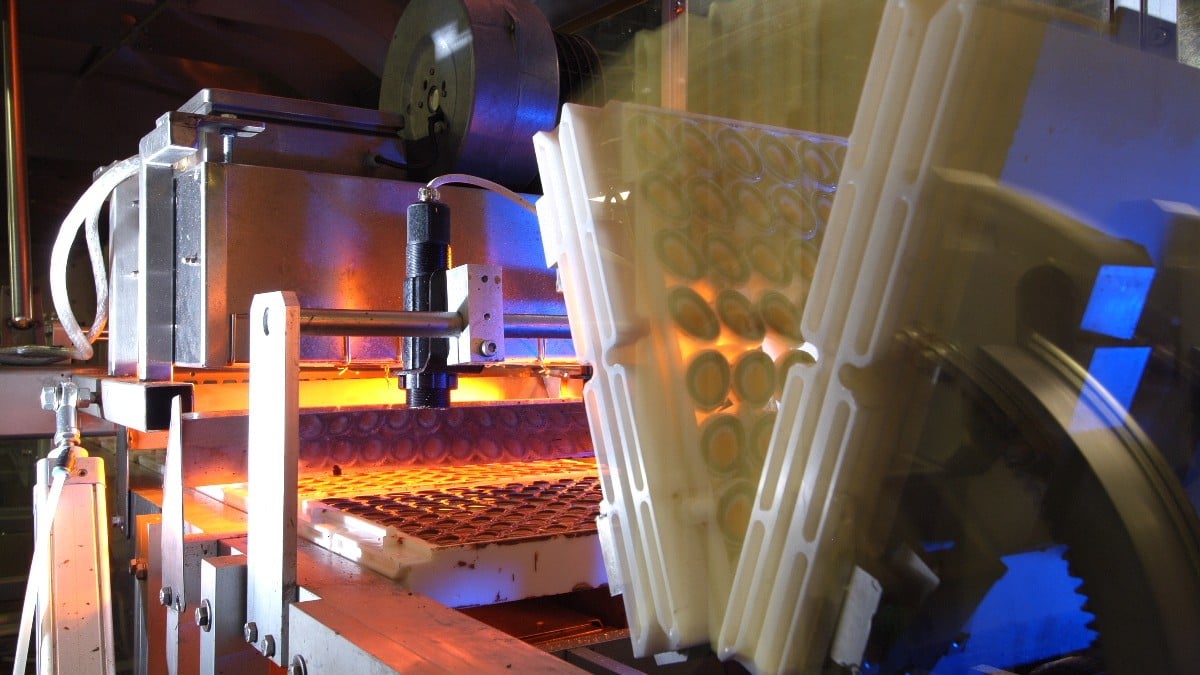

Excelitas‘ carbon medium-wave infra-red heating systems are helping Magna Speciality Confectioners achieve more consistent quality in filled chocolate products, while reducing energy consumption and equipment footprint compared with its previous heating arrangements.
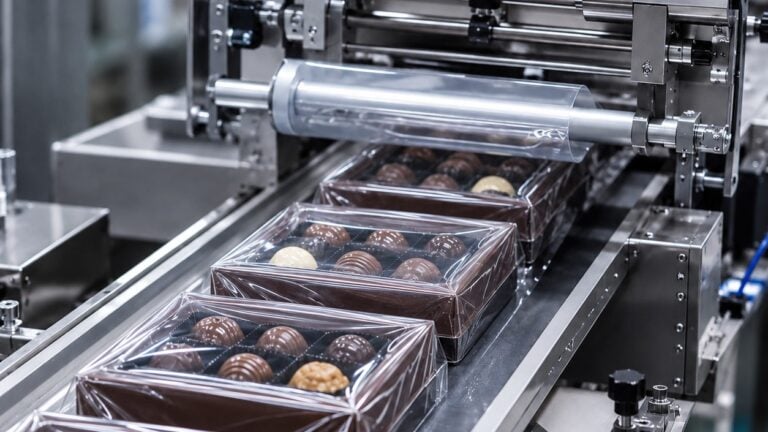
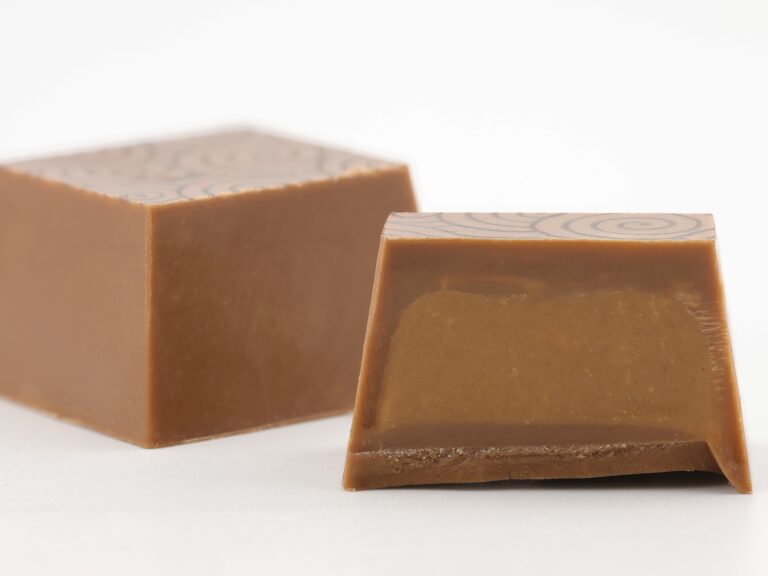
The contract manufacturer produces filled chocolate eggs and bars for major chocolate brands, where precise temperature control is essential to maintain product quality and avoid defects during subsequent chilling and wrapping.
Greater Control During Chocolate Moulding
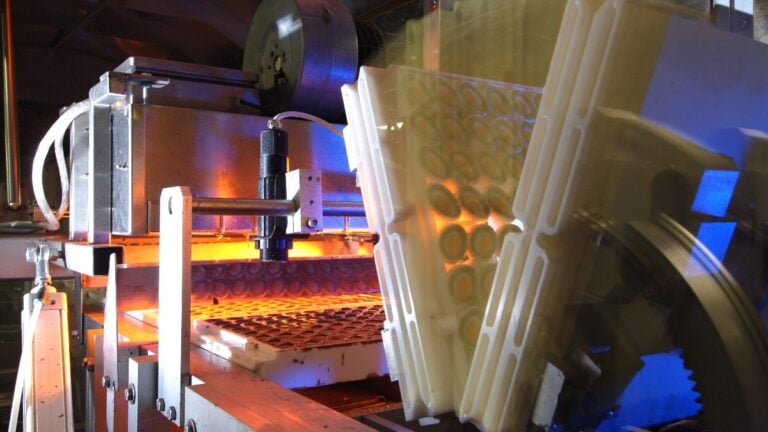
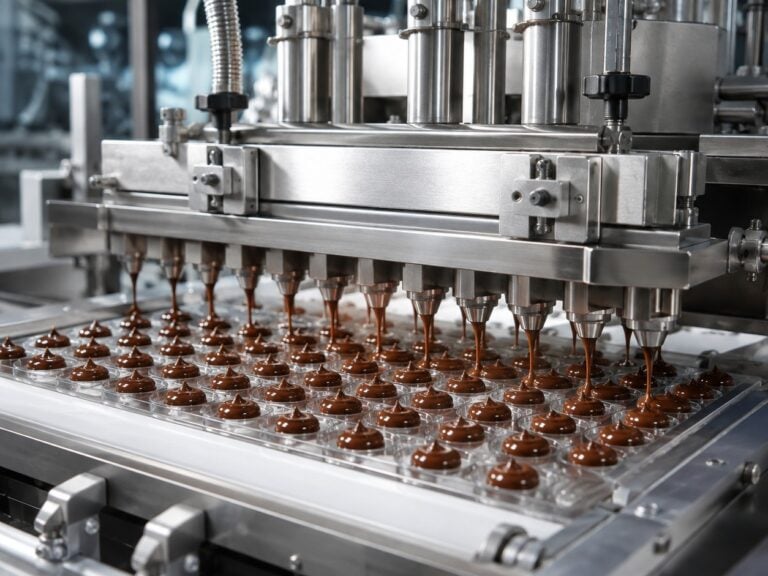
On its book moulding line, Magna deposits molten chocolate into moulds to create two egg halves, which are chilled and filled before being joined. The rims must be reheated so the halves fuse, while the moulds themselves require precise temperature control before chocolate is deposited.
Previously, hot-air blowers were used for both processes. However, inconsistent temperature profiles could affect chocolate temper and consistency, resulting in quality control challenges.
Following successful trials at the Neston Applications Centre, Magna selected four pyrometer-controlled, 8.4kW carbon medium-wave infra-red systems. Sensors measure mould temperatures before heating and verify the results afterwards, adjusting heater operation to maintain consistent processing conditions.
Improving Energy Efficiency and Consistency
At the mould heating stations, temperatures can be maintained at 29°C ±1°C, with typical heating times of three to four seconds at line speeds of 16 to 20 modules per minute.
On the book moulding section, pyrometer readings control the heating of chocolate rims to approximately 30°C, supporting reliable joining of the egg halves.
The installation also reduces heating power requirements. Where the previous arrangement used three 9kW hot-air blowers per station, the infra-red alternative requires 8.4kW.
The carbon heaters respond almost instantly, allowing them to be switched off during unexpected production stoppages to minimise product spoilage.
Magna has also benefited from improved finished product presentation, alongside significant space and energy savings.