Confectionery giants seek more cost and energy efficient products, this feature assesses how packaging companies are modifying their wrapping machines to meet this demand.
In the confectionery world, wrapping systems and technology are a vital sector in the market. The presentability and image of a product is vital whilst also ensuring that the confectionery product is protected. Wrapping technologies are very complex and confectionery clients are expecting developments to be made to their wrapping technology machines. One of these developments is that confectionery companies are looking for machines that are cost effective and efficient. Consumer demands have led to these confectionery companies seeking these new innovative machines. With that being said, this issue wishes to assess the ways in which packaging companies are creating machines that are faster, better and most importantly cost effective.
What is wrapping technology?
Wrapping machines are a form of packaging technology which is specifically used to wrap flexible packaging material such as paper, aluminium, plastic and film. This material is then wrapped around a product or a group of products. As many of you are aware, flexible wrapping materials are extremely versatile which is why they are so commonly used amongst the bakery and confectionery sector. The usual confectionery products that are used in wrapping technology are chocolate bars, lollipops and other forms of candy. However, other industries also rely on wrapping technology such as the toiletries and cosmetic sector.
There is a variety of material used in this type of machinery with different sealing methods dependent on the product that is being wrapped. In the confectionery sector it is usually polymer films or cellulosic and bioplastic film used to cover confectionery products. The benefit of flexible packaging is that they extend the shelf life of the food inside through multiple ways. With this type of material there is a higher barrier film and greater airtight seals meaning that it is kept safe from oxygen and moisture. As many of these are resealable, they are even more effective in taking the oxygen out which therefore means that food is protected from microbes and fresher for longer.
How does wrapping technology work?
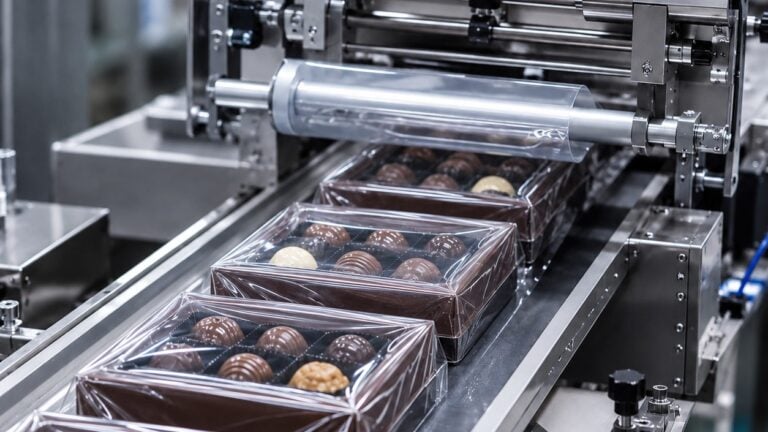
Every process is dependent on the machine that is used, but the process can be broken down into a simplistic form. The first step is usually when the solid product is manually fed onto a conveyor belt. The conveyor belt carries the product into the machine where the film is tucked under and over the product to cover it. While this is happening the fold box forms a film tube to help cover the product. It then moves along the conveyor belt to the end sealer where the film is crimped to seal it and cut to separate the products. Some products may be inspected but overall, most of the product is then carried off to the seller to be distributed to the public. This type is usually associated with flow wrapping. The benefits of flow wrapping are that it requires minimal movement, reduced waste material making it cost and environmentally friendlier. This is because the material in the seal pack is kept to a minimum. On top of this, flow wrapping machines can provide a greater airtight opportunity. Good flow wrapping restricts the packaging around the product so that it won’t move or be disturbed. One common material used in flow wrapping machines are polyethylene terephthalate (PET), a common thermoplastic polymer resin of the polyester family, often used for containers of liquids and food. Another common material used is polyethylene (PE) which has several key usages including plastic packaging. Both of these plastics are considered robust materials that are long lasting.
Read more of this article in our latest edition here: March 2022 Single Issue form – International Confectionery Magazine (in-confectionery.com)
Media contact
Roshini Bains,
Editor, International Confectionery
Tel: +44 (0) 1622 823 922
Email: [email protected]