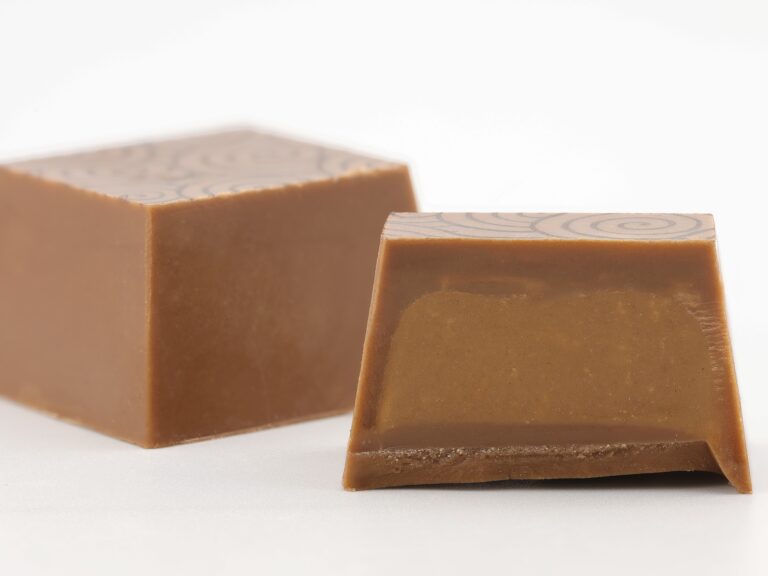

Anne Mertens-Hoyng, Bakery Category Senior Director at Cargill, explains how NextCoa™ supports manufacturers with a resilient, lower-impact alternative to traditional cocoa
Could you explain the concept behind NextCoa™? What gap in the market was Cargill aiming to address when developing this solution?
Manufacturers today are balancing multiple pressures at once. Premium ranges will continue to prioritise traditional chocolate, where heritage, origin and classic sensory cues are central to the brand story. At the same time, high-volume and everyday formats require greater flexibility around supply stability, cost predictability and environmental performance. What was missing was a scalable confectionery alternative that could deliver indulgence while reducing reliance on cocoa.
NextCoa™ is produced by Voyage Foods, in collaboration with Cargill, using revalorised grape seeds and sunflower kernels – widely available raw materials that are not directly exposed to the same concentrated climate and geopolitical risks as cocoa. The use of revalorised side streams is deliberate. By upcycling these materials into high-value food ingredients, we contribute to a more circular food system while reducing pressure on cocoa-dependent supply chains.
Through Voyage Foods’ patented technology, these ingredients are transformed in a process similar to chocolate to develop roasted notes, colour and texture which mimics what consumers associate with chocolate. The process carefully builds flavour depth, smoothness and melt characteristics, allowing the finished ingredient to perform across coatings, inclusions and bakery applications.
Cargill is the exclusive B2B global distributor for Voyage Foods, with NextCoa™ sitting within our broader Cost-Effective Delights approach, which offers manufacturers a spectrum of solutions – from traditional chocolate and cocoa-optimised systems to coatings and confectionery alternatives to chocolate. It allows brands to segment portfolios intelligently, choosing the right solution for each product role, price tier and consumption occasion. It is all about expanding the toolbox so manufacturers can continue delivering consistent, trusted indulgence while navigating volatility and evolving consumer expectations.
From a technical standpoint, how does NextCoa™ replicate or complement the sensory and functional characteristics of traditional cocoa in confectionery applications?
Cocoa is technically complex. It contributes flavour depth, colour, fat-driven mouthfeel, melt behaviour and emotional familiarity all at once. That is why developing an alternative requires a systems approach rather than a simple substitution.
With NextCoa™, we start from the eating experience, not the ingredient list. Through Cargill’s Heartbeat Sensory Intelligence Program, we combine trained sensory panels, large-scale consumer testing and AI-driven predictive modelling to understand how consumers experience indulgence – from first bite through aftertaste. We measure attributes such as flavour intensity, bitterness balance, aroma release, creaminess, melt and texture development, and translate those into quantifiable data.
At expert panel level, we apply Quantitative Descriptive Analysis to benchmark NextCoa variants directly against traditional chocolate systems. For example, in coated applications, one of our variants captures the core sensory architecture of milk chocolate with remarkable proximity. On a structured 0–10 intensity scale, attributes such as sweetness, dairy character and overall flavour intensity align closely with conventional chocolate references, while also delivering distinctive cocoa, cereal and nutty notes with hints of caramel and vanilla.
This level of granularity allows us to understand not just whether a product is “liked,” but how its flavour builds, how sweetness and dairy notes balance against roasted tones, and how aftertaste develops over time. That insight is critical when tailoring solutions for specific applications, whether a biscuit coating, inclusion or bakery filling.
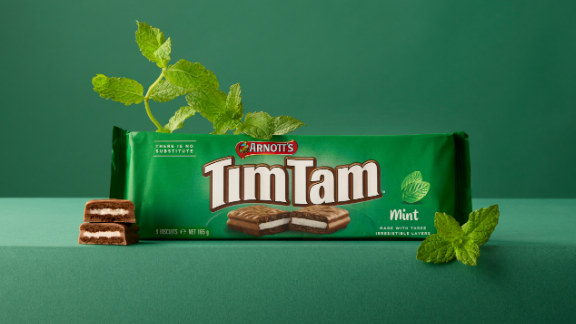
Using predictive heat maps and preference modelling, we can visualise which sensory profiles are most likely to resonate with specific consumer segments before a product reaches the shelf. In the case of NextCoa™, we evaluated multiple flavour intensities – from mild dairy-style notes to deeper roasted variants – and mapped how those would perform in real applications such as chocolate-coated cookies. Those predictions were then validated through consumer testing, ensuring alignment between modelled preference and real-world response.
Functionally, the system is designed to deliver the appropriate snap, gloss and melt characteristics expected in coating and compound-style applications. The objective is not to replicate cocoa molecule by molecule, but to ensure that in defined formats, the sensory cues that drive indulgence are present, balanced and repeat-worthy.