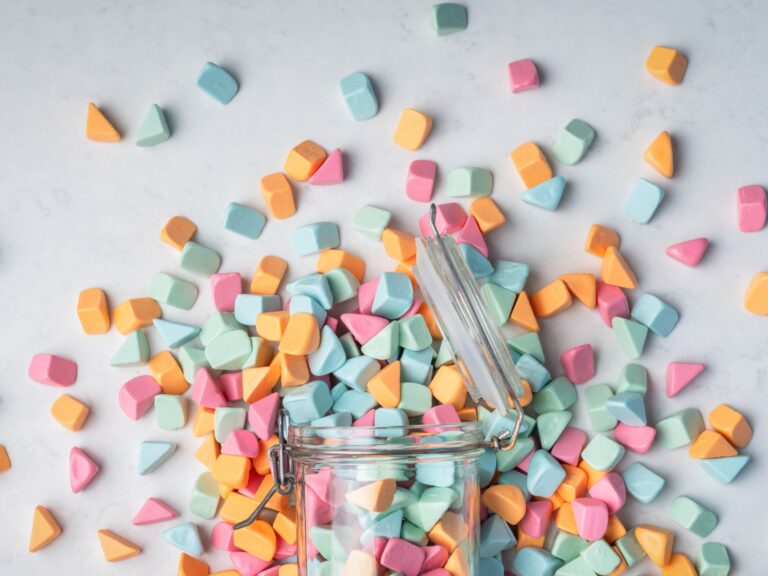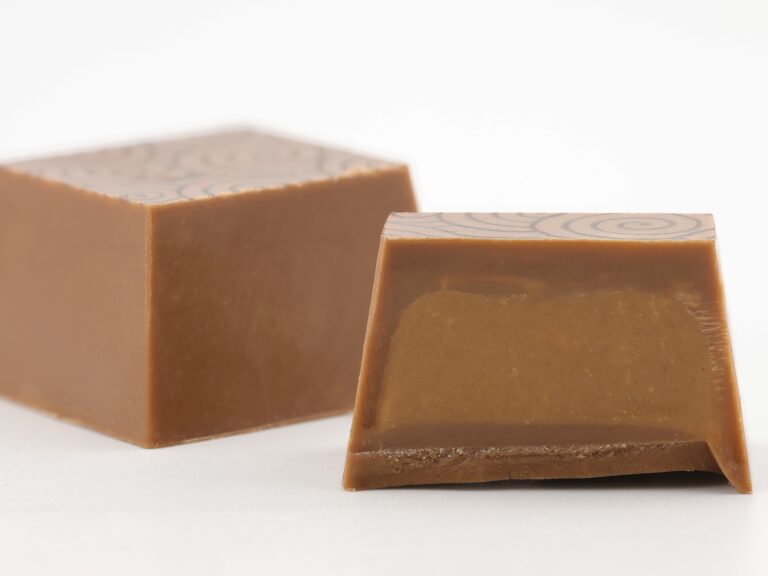
We talk with GNT Group’s Market Development Manager, Maartje Hendrickx, about how their EXBERRY® range is transforming confectionery with vibrant, natural shades derived from fruits, vegetables, and plants
Can you tell us about the latest developments in your EXBERRY® range of plant-based colours?
We create all our EXBERRY® colours from non-GMO fruit, vegetables, and plants. We can provide a full spectrum of vibrant shades in almost any confectionery application while supporting natural ingredient lists. To remain at the forefront of the global market for plant-based colours, we continue to come up with innovative ideas that will serve our clients’ needs and fulfil the demands of consumers and the market.
Most recently, we launched an orange emulsion made from paprika. EXBERRY® Shade Vivid Orange makes it possible to achieve bright orange shades in a wide range of confectionery products like marshmallows, gummies and hard panned confectionery as well as other water-based food applications. It has a high colour intensity that supports cost-effective low dosages and can be listed simply as “paprika oil” under EU regulations.
What role do natural colours play in the confectionery industry, and how does GNT ensure that EXBERRY® colours maintain vibrancy and effectiveness across various confectionery applications?
Modern consumers want their confectionery to be made with natural colours, especially in Europe. At the same time, it’s vital that they match up to expectations. Colours made from fruit, vegetables, and plants rely on the natural pigmentation in the raw materials. Because of that, it is important to consider factors like the pH of the application, what temperatures it will be exposed to during processing, and storage requirements.
Our team can identify the most effective natural colouring solution for different project requirements. For example, turmeric is light-sensitive so might be a good option for yellow in a product with opaque packaging but, for transparent packaging, it might be better to use another option such as safflower or carotenes. Once we’ve helped customers find the right raw materials, we can carry out accelerated stability tests to ensure the product will retain its shade throughout the shelf life.
When working with challenging applications like chocolate or hard-panned confectionery, what unique solutions exist to address potential formulation issues?
EXBERRY® colours are available in a range of formats including liquids, powders, micronised powders, and oil-dispersible concentrates. Our experts will recommend the best option depending on the application and recipe.
Some applications can be more challenging than others for various reasons. In chocolate, the colour can be applied as a painted decoration on the surface or within a sprayed decoration, dusting or outer coating. If colouring the mass itself, it can be difficult to achieve a homogenous shade using standard colours. To solve that, we can use micronised powers or oil-dispersible colours, which have a much smaller particle size. That allows for a consistent appearance and more intense visual impact.
With hard-panned confectionery, the specific challenge is that the pieces can become sticky and adhere to each other when invert sugar is used as a carrier for the colour. We offer a range of colours that use sucrose as a carrier instead as it recrystallises and avoids issues with adherence.
Could you elaborate on how plant-based colours are formulated to suit gummy candies in particular, considering the variations in pH and processing temperatures in these products?
Plant-based colours can be used to deliver a diverse spectrum of bright shades in gelatine-, starch-, and pectin-based gummies. The main technical considerations are usually pH and processing temperatures, but it depends on the target shade. Most of our red shades are based on anthocyanin pigments, so they need low pH levels to deliver the brightest reds and will shift to a bluer hue as levels get higher. If you’re working with a non-acidified gummy, you can avoid that issue by using a blend of red and yellow raw materials. We use the superfood spirulina for blues and greens. Spirulina has a phycocyanin pigment that’s sensitive to acid and heat. That means it’s important to avoid direct contact with acidic ingredients, and heat exposure should be minimised as much as possible. If needed, it’s possible to protect the pigment by insulating it using a premixed blend with something like corn syrup. Alternatively, the colour dosage can be increased.
There are always a lot of factors to bear in mind when using plant-based colours, so it’s important to work with a knowledgeable supplier that has experience overcoming any technical challenges that might arise. We provide our customers with full support throughout the whole product development process including raw material selection and formulation advice to ensure the switch is smooth and successful.
Read more latest industry news and developments in our free to download magazine.
Never miss a story… Follow us on:
International Confectionery
@InConfectionery
@InConfectionery
Media contact
Hannah Larvin
Editor, International Confectionery
Tel: +44 (0) 1622 823 920
Email: [email protected]