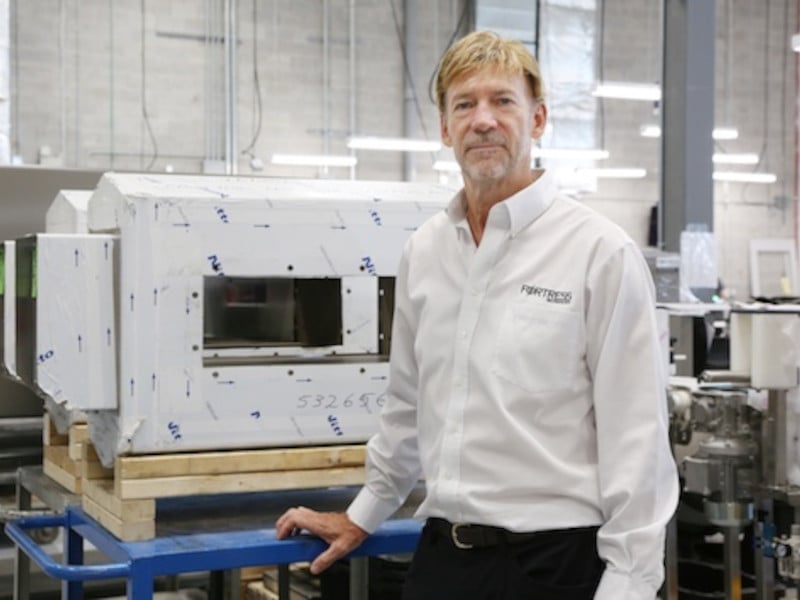

Reflecting on the most pivotal moments in the company’s 30-year history, Fortress Technology Founder and President Steve Gidman explores how inspection technology has evolved to support the advances in food safety standards. Focusing on the future, Gidman also offers insight into digital developments and how these continue to transform manufacturing efficiency and food safety compliance.
In 1996, the food production floor was predominantly a high-touch environment. A typical packaging line often required between 10 to 15 operators to closely monitor equipment and make manual adjustments to inspection equipment settings. In this era, metal detection was largely reactive rather than proactive. Attention was only really directed to inspection machines if an alarm sounded or the production line stopped.
Although there were whispers of an impending digital revolution, comprehensive food safety regulations had not yet been implemented. The Food Safety Modernization Act (2011), the FSA (2000) and the EFSE (2002) were yet to establish the standardised safety protocols that are now commonplace in food processing environments worldwide.
Today, the bustling factory floor has undergone a tectonic shift in operational philosophy, evolving into what Gidman describes as a ‘ghost town’. Modern plants are defined by high speed automation with machines processing 200 to 300 packs per minute and requiring minimal human intervention. In this new landscape, the metal detector has transitioned from a standalone hardware requirement to a sophisticated, data-driven partner essential for brand protection. All pointing towards the rise of the intelligent and integrated food factory.
UX always prioritised
During the early development days of food metal detectors ‘feature creep’ increasingly occurred. As manufacturers sought to introduce new functionalities, machines sometimes became burdened with unnecessary features that complicated operation and maintenance.
Engineers frequently loaded machines with complex interfaces that looked impressive on a spec sheet but baffled operators on the floor, recalls Gidman. Drawing on his extensive knowledge of signal processing and radio frequency, the industry pioneer instantly recognised the importance of user-centric simplicity and reliability. The company’s original tagline Simple Operation, Outstanding Reliability, Exceptional Performance, is indicative of the company’s enduring commitment to excellence. Customers value these qualities just as much today as they did from the start.
Making digital waves before Industry 4.0
The move toward total automation isn’t just about increasing throughput to 300 packs a minute. Digitalisation, combined with heightened awareness of food safety and more stringent rules, has seen the technology progress significantly, particularly in relation to inspection and metal detection sensitivity.
Some of the latest advancements occurred around 2011. This is when the US enacted its most sweeping food safety rules, the Food Safety Modernization Act (FSMA). With these legislative reforms, rather than just analysing hazards, the focus shifted towards prevention. Supply chain disruptions, a pandemic, several financial crisis situations, labour shortages and incidents like the European horsemeat scandal means that processors have navigated multiple challenges.