
Cadbury Dairy Milk and Australian cosmetics company MCoBeauty have crossed retail categories with a limited-edition collection bringing chocolate and beauty products together. Launched exclusively through Woolworths stores across Australia on 5 August, the collaboration is designed to create interest in both the confectionery and cosmetics aisles.
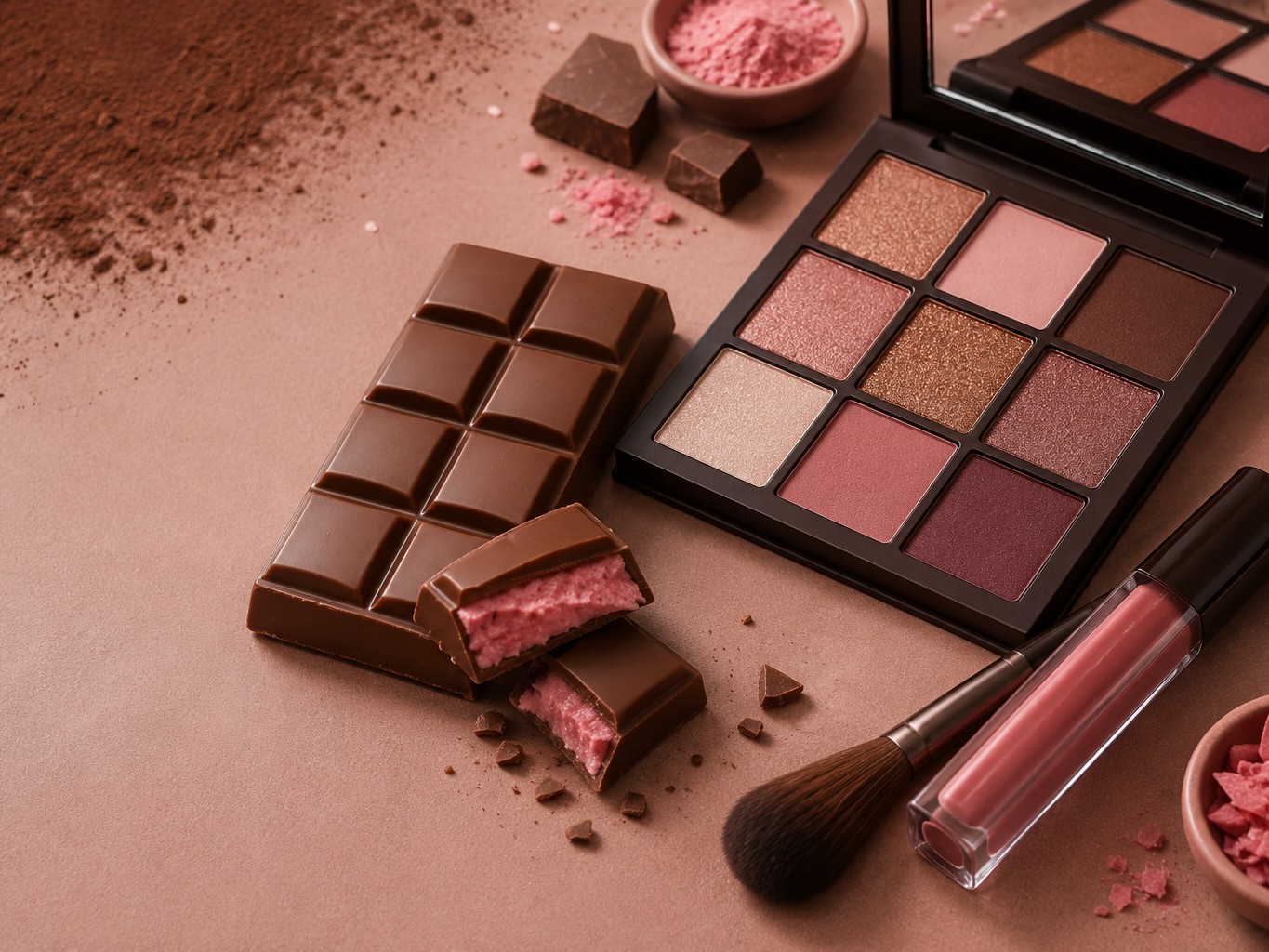
At the centre of the launch is a Cadbury Dairy Milk Watermelon Chocolate Block inspired by MCoBeauty’s Hydrate & Glow watermelon range. The product combines Cadbury milk chocolate with a bright pink, flowing watermelon-flavoured centre, translating one of the beauty company’s recognisable product themes into an edible format.
What is included in the Cadbury and MCoBeauty collection?
The partnership works in both directions. Alongside the chocolate block and a Dairy Milk gift box containing classic and watermelon-centred chocolates, MCoBeauty has developed cosmetics influenced by Cadbury’s colours and product shapes. The beauty range includes a chocolate-bar-inspired eyeshadow palette, a lip peptide treatment and a collection of branded beauty essentials.
Rather than simply applying two logos to conventional products, the companies have exchanged flavours, colours and visual cues. Watermelon moves from skincare into confectionery, while Cadbury’s chocolate identity is reinterpreted through makeup. This reciprocal approach gives the launch a creative idea and content that can be photographed, sampled and discussed across social platforms.
The Woolworths exclusivity is also important. Housing both brands under one retail roof allows the campaign to connect separate shopping missions and encourages consumers to move between categories. It demonstrates how retailers can become active partners in product development, using limited availability and unexpected combinations to create urgency.
Why are confectionery brands pursuing unexpected collaborations?
For confectionery manufacturers, collaborations offer a way to generate attention without relying solely on a new flavour or pack format. Pairing with a company from another sector can introduce a chocolate brand to communities, provide fresh design references and create a story capable of travelling beyond traditional food media.
The Cadbury and MCoBeauty collection appears suited to younger, digitally engaged consumers accustomed to beauty tutorials, product reveals and limited-edition drops. Its pink centre and chocolate-themed cosmetics have been created with visual sharing in mind, turning the unveiling and tasting experience into part of the product’s appeal.
Cross-category partnerships still require careful brand alignment. Novelty may encourage an initial purchase, but flavour, quality and value will determine whether the product leaves an impression. There is also a risk that a concept can feel forced if the connection between brands is unclear.
In this case, shared associations with colour, indulgence and affordable treats provide a bridge. The collaboration shows how confectionery companies can extend innovation beyond formulation, using culture, retail partnerships and playful category crossover to create a consumer experience.