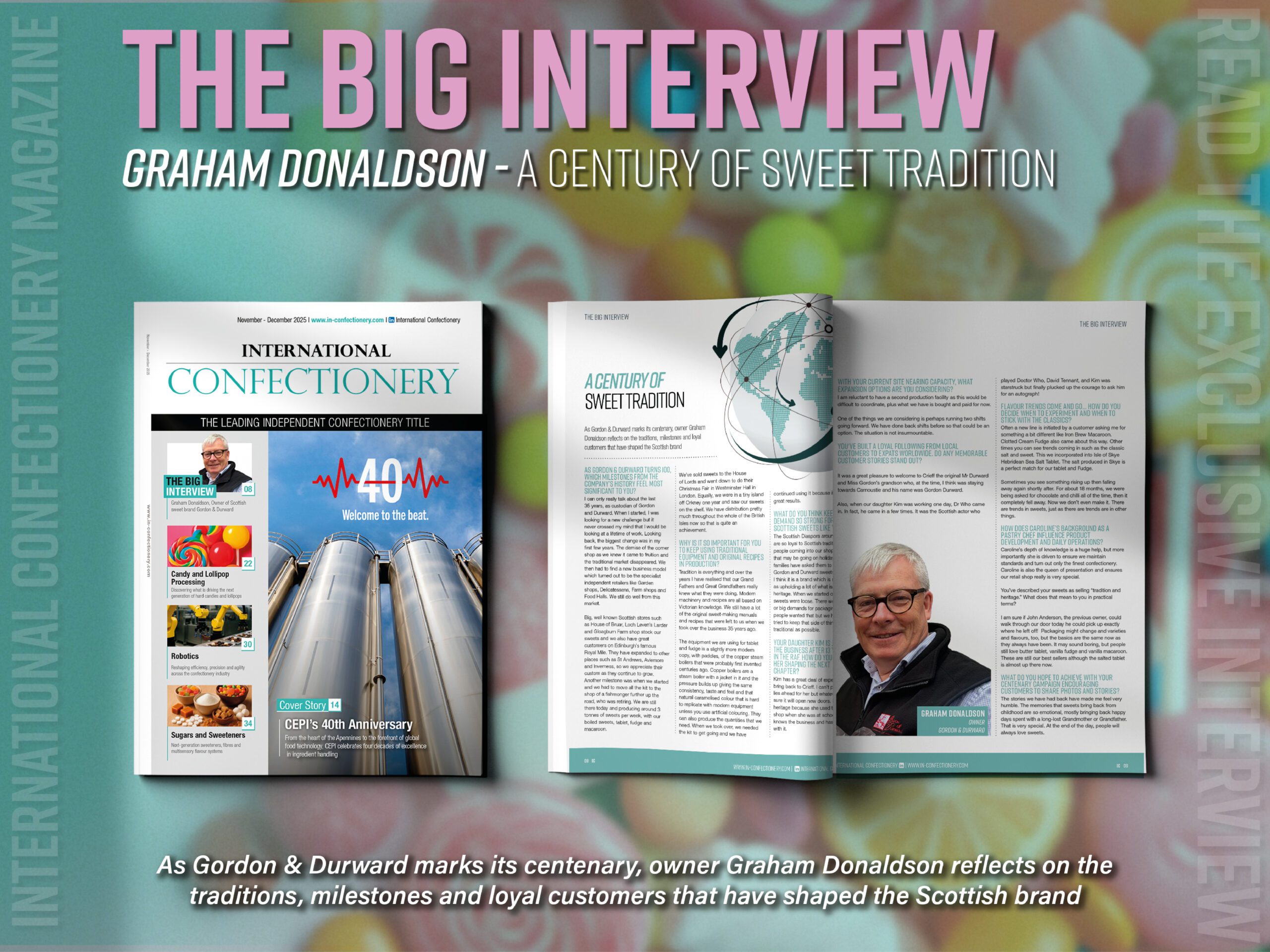

As Gordon & Durward marks its centenary, owner Graham Donaldson reflects on the traditions, milestones and loyal customers that have shaped the Scottish brand
As Gordon & Durward turns 100, which milestones from the company’s history feel most significant to you?
I can only really talk about the last 35 years, as custodian of Gordon and Durward. When I started, I was looking for a new challenge but it never crossed my mind that I would be looking at a lifetime of work. Looking back, the biggest change was in my first few years. The demise of the corner shop as we knew it came to fruition and the traditional market disappeared. We then had to find a new business model which turned out to be the specialist independent retailers like Garden shops, Delicatessens, Farm shops and Food Halls. We still do well from this market.
Big, well known Scottish stores such as House of Bruar, Loch Leven’s Larder and Gloagburn Farm shop stock our sweets and we also have great customers on Edinburgh’s famous Royal Mile. They have expanded to other places such as St Andrews, Aviemore and Inverness, so we appreciate their custom as they continue to grow. Another milestone was when we started and we had to move all the kit to the shop of a fishmonger further up the road, who was retiring. We are still there today and producing around 3 tonnes of sweets per week, with our boiled sweets, tablet, fudge and macaroon.
We’ve sold sweets to the House of Lords and went down to do their Christmas Fair in Westminster Hall in London. Equally, we were in a tiny island off Orkney one year and saw our sweets on the shelf. We have distribution pretty much throughout the whole of the British Isles now so that is quite an achievement.
Why is it so important for you to keep using traditional equipment and original recipes in production?
Tradition is everything and over the years I have realised that our Grand Fathers and Great Grandfathers really knew what they were doing. Modern machinery and recipes are all based on Victorian knowledge. We still have a lot of the original sweet-making manuals and recipes that were left to us when we took over the business 35 years ago.
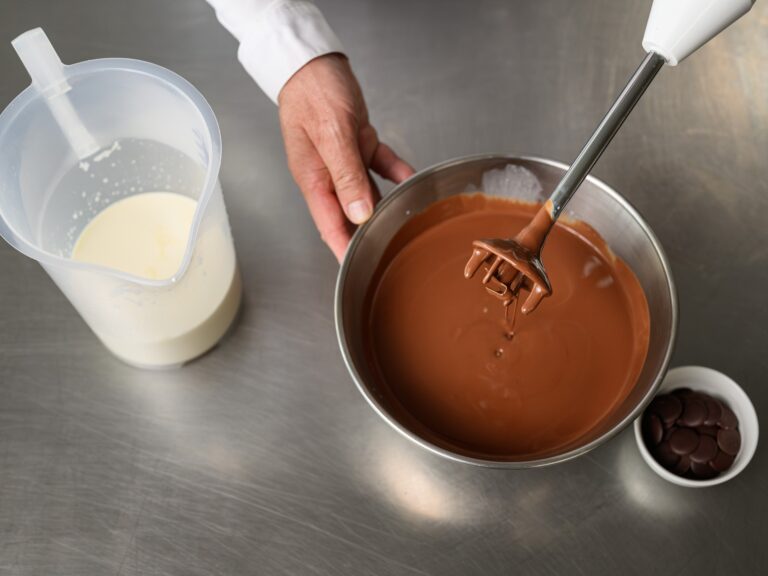
The equipment we are using for tablet and fudge is a slightly more modern copy, with paddles, of the copper steam boilers that were probably first invented centuries ago. Copper boilers are a steam boiler with a jacket in it and the pressure builds up giving the same consistency, taste and feel and that natural caramelised colour that is hard to replicate with modern equipment unless you use artificial colouring. They can also produce the quantities that we need. When we took over, we needed the kit to get going and we have continued using it because it produces great results.
What do you think keeps global demand so strong for classic Scottish sweets like yours?
The Scottish Diaspora around the world are so loyal to Scottish traditions. We get people coming into our shop all the time that may be going on holiday and their families have asked them to bring Gordon and Durward sweets with them. I think it is a brand which is recognised as upholding a lot of what is dear to their heritage. When we started out, all the sweets were loose. There were no bags or big demands for packaging. In time, people wanted that but we have even tried to keep that side of things as traditional as possible.
Your daughter Kim is joining the business after 13 years in the RAF. How do you see her shaping the next chapter?
Kim has a great deal of experience to bring back to Crieff. I can’t plan what lies ahead for her but whatever it is I am sure it will open new doors. She has the heritage because she used to work in the shop when she was at school, so she knows the business and has grown up with it.
Read the full interview in our latest issue here