Francisco Gomez, CEO of Luker Agrícola, explains how Colombia’s first large-scale cocoa plantation is driving sustainability, traceability, and rural development…
Please introduce yourself and what you do
I’m Francisco Gomez, 61, a civil engineer with a strong technical and commercial background across the entire cocoa-to-chocolate supply chain. I’ve been with Luker Chocolate for over 30 years and currently serve as CEO of Luker Agrícola, where I’m responsible for managing Luker’s own cocoa plantations.
What is the mission and vision behind Luker Agrícola, and how does this fit within the wider Luker Chocolate strategy?
Luker Agrícola is the agricultural arm of Luker Chocolate, a Colombian, family-owned B Corp certified chocolate manufacturer. When Luker began introducing Colombian chocolate to the world, we recognised the need to demonstrate that cocoa could be a profitable crop—not just for smallholders, but also for larger agricultural enterprises. That’s why, in 2011, we established Colombia’s first large-scale cocoa plantation. It enabled us to optimise agricultural practices and demonstrate that cocoa from Colombia could be sold globally with strong consistency, quality and at scale.
Our initial goal was to produce sustainable, ethically sourced, homogeneous and fully traceable fine-flavour cocoa. Today, that vision is our reality. With over 1,200 hectares of fine-flavour cocoa, we’re supplying 20% of Luker Chocolate’s export needs through Luker’s own farms. Simultaneously, we are creating impact across the value chain – proving that cocoa-growing communities benefit from better access to rural employment, education, healthcare and improved local infrastructure.
What are some of the most pressing challenges you’ve observed in cocoa sourcing today, and how is Luker Agrícola addressing these on the ground in Colombia?
The cocoa industry faces three primary challenges: supply disruptions caused by climate change and crop diseases, new traceability requirements driven by international regulation such as EUDR and increasing sustainability requirements that encompass responsible environmental and social practices.
Luker Agrícola is uniquely positioned to address these challenges at scale through Luker’s cocoa plantations. This large-scale operation enables us to provide Luker Chocolate with a consistent and compliant cocoa supply that meets international sustainability and traceability requirements, ensuring reliability for our global clients.
Our farms serve as the foundation of Luker’s Anchor model. It is a social innovation framework that extends benefits to surrounding small-scale farmers and cocoa-growing communities. Through this model, we create direct value for local producers in three main ways:
Direct economic impact: We purchase cocoa directly from small farmers, ensuring fair pricing and eliminating intermediaries from the supply chain.
Knowledge transfer: We share agricultural expertise and best practices developed on our farms, helping farmers optimise productivity and improve post-harvest processes.
Rural development: Our operations serve as a significant source of formal rural employment and drive broader economic growth in the region.
How does Luker Agrícola’s approach to sustainable cocoa farming empower local farming communities and promote long-term development?
Through Luker Agrícola, Luker established anchor models centred in our own farms, fostering regional development by promoting cocoa cultivation as a profitable and productive trade, training farmers and purchasing their cocoa – whether fermented or fresh. We also leverage learnings and research from our anchor farms to give surrounding farmers technical advice and offer increased formal rural employment to drive economic growth in those regions.
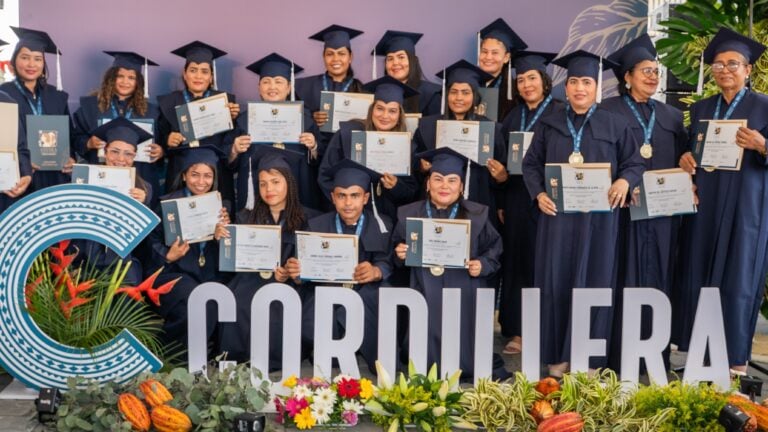
Through our triple impact model, we carefully balance economic, social, and environmental dimensions. This ensures that all our cocoa —whether grown on our own farms or sourced from farmers or associations— is 100% traceable to the cocoa association or regional buyer level and that we’re making a real difference in the communities where we operate. For example, through The Chocolate Dream in Casanare, we engage rural youth through educational projects focused on gender equity, human rights, and financial literacy, while strengthening their ties to agriculture and cocoa.
In your role on the board of the World Cocoa Foundation, what strategic initiatives are you most excited about right now?
Right now, I’m especially excited about the World Cocoa Foundation’s work on compliance and standards, which are vital for the cocoa sector’s credibility. With new regulations like the EUDR coming into effect, the World Cocoa Foundation is helping members navigate these changes with shared tools and improved sustainability data.
I’m also inspired by how, in response to the cocoa market’s volatility, people are increasingly looking to Latin America for long-term, stable cocoa supplies.
Finally, I’m excited by the growing emphasis on regenerative production models and landscape-level impact. If you haven’t heard of landscape-level impact before, it is an approach to improving cocoa-growing regions for farmers and communities while simultaneously protecting the environment, other crops and biodiversity.
In short, we’re moving beyond siloed interventions to a more holistic view of how cocoa is grown, financed and supported. Not just for productivity but also for resilience, equity and long-term environmental sustainability. That’s the direction we need to go in, and I’m proud to be part of a board that is helping to make that happen.
Read the full interview in our latest issue here