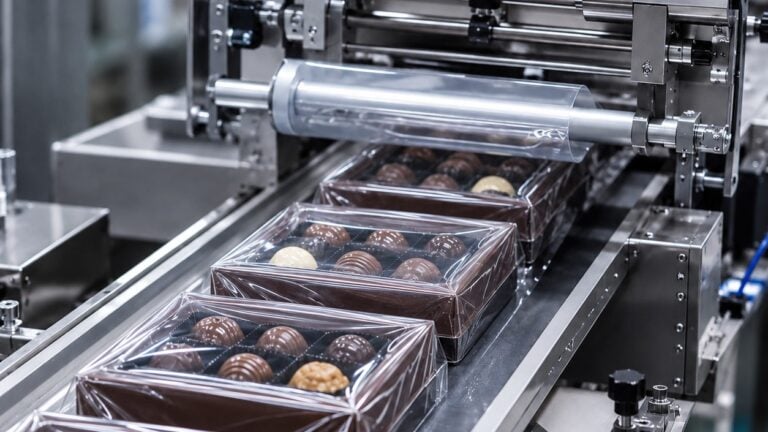
The global market for secondary and protective packaging is projected to reach $300.7 billion by 2030, driven by the accelerating rise of e-commerce and intensifying focus on sustainability, according to a new report from Smithers, produced in association with Packaging Innovations & Empack 2026.
E-commerce growth and material shifts reshape secondary packaging
E-commerce is now the fastest-growing segment, surpassing consumer durables, non-durables, and industrial packaging. Smithers data shows that European e-commerce secondary packaging volumes will rise 45% by 2030, compared to just 10.5% growth across the overall market. In volume terms, e-commerce packaging is expected to increase from 4.7 million tonnes in 2023 to 6.8 million tonnes in 2030, versus 30.6 to 33.8 million tonnes for the total volume of secondary packaging. This shift means UK packaging demand is increasingly driven by warehouses, couriers, and returns rather than supermarket shelves, with implications for corrugated investment, pEPR fees, and recycling infrastructure.
Paper-based solutions are overtaking plastic. Paper fill is forecast to grow at 3.9% CAGR in Western Europe to 2030, driven by automated dispensers in e-commerce fulfilment centres. Types of paper fill include twisted paper, Kraft paper void fill, and flexi-wrap moulded pulp, which are replacing bubble wrap, air pillows, and foam. In the UK, paper is increasingly chosen not just for sustainability but for operational reasons by avoiding the Plastic Packaging Tax, reducing EPR penalties, and suiting kerbside recycling.
Consumer expectations are clear: recyclability dominates. A 2025 McKinsey survey shows that 77% of UK consumers rate recyclability as extremely or very important. Consumers also value recycled content and compostability, but above all they want products that arrive undamaged and well-cushioned, even if that means slightly larger packaging. This highlights a growing tension: minimal packaging is not always the most sustainable solution. Returns and reshipping often create more emissions than slightly larger boxes or additional cushioning.
Regulation, right-sizing and protection remain critical priorities
Regulatory pressures are reshaping the industry. A 2027 update to the EU’s Packaging and Packaging Waste Regulation (PPWR) will ban certain single-use plastics for multi-packs and set a 50% maximum empty-space limit for grouped and e-commerce packaging. While overall demand continues to grow, PPWR is expected to moderate growth in shrink wrap and traditional multi-pack plastics, accelerating adoption of cartonboard and paper fill. Empty air inside boxes is now a direct regulatory and financial risk, particularly for UK exporters and retailers selling into the EU.
Returnable packaging is emerging as an opportunity but comes with challenges. Cost, low return rates, durability, functionality, and logistics for cleaning and multiple deliveries remain significant barriers. Businesses exploring reusable packaging solutions must balance consumer convenience, product protection, and environmental impact to succeed.
“The global packaging industry is placing increasing emphasis on improving the environmental sustainability of its products as consumer expectations and regulatory requirements continue to intensify,” says Josh Brooks, Divisional Director – Packaging at Easyfairs. “Companies are working to reduce material use, adopt recyclable or renewable resources, and lessen overall environmental impact. However, these efforts must be balanced with the essential need for packaging to protect products throughout the supply chain.”
Read more latest industry news and developments in our free to download magazine.
Never miss a story… Follow us on:
LinkedIn: International Confectionery
X: @InConfectionery
YouTube: @ConfectioneryTV
Media contact
Joseph Clarke
Senior Editor, International Confectionery
Tel: +44 (0) 1622 823 920
Email: [email protected]