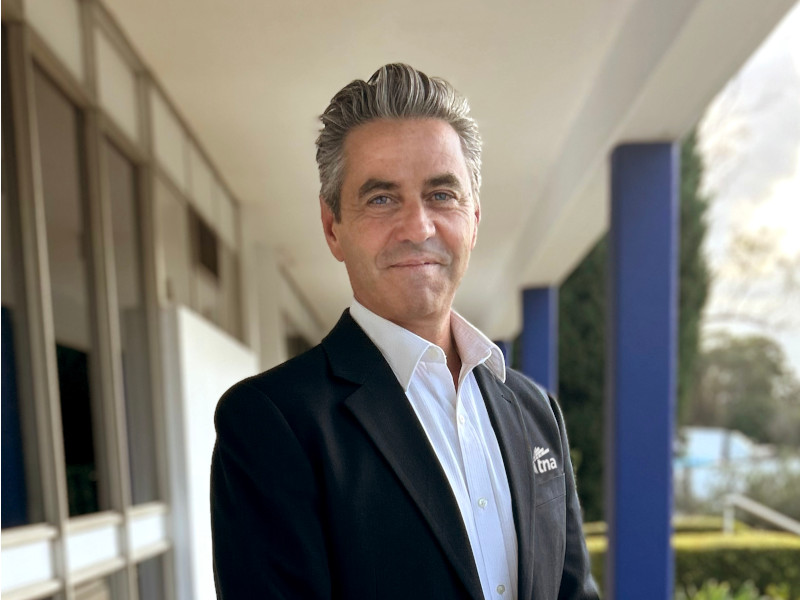

TNA Solutions’ CEO Michael Jonson explains how intelligent integration and strategic simplicity are shaping future-ready confectionery production
You’ve spent many years in the food processing and packaging sector. What key experiences or influences have shaped your leadership approach?
My leadership approach has been shaped by breadth as much as depth. Throughout my career, I’ve worked across strategy, treasury, operations, manufacturing, finance and risk management, in environments ranging from highly regulated financial services to complex industrial businesses, often during periods of disruption, meaningful growth or transformation.
I’ve gained exposure across the value chain, from product development and engineering to sales, logistics, purchasing and aftermarket support. Those experiences reinforced that sustainable success is rarely about one function or a single decision. It comes from aligning people, processes and purpose behind a clear strategy, then executing consistently.
The same applies in my role at TNA Solutions. Food manufacturers are under intense pressure to do more with less: deliver a wider range of products, respond quickly to shifting consumer trends and protect profitability amid rising costs and labour shortages. In this environment, alignment between equipment, processes and people is critical. That is why our innovation focus is on intelligent integration, helping food producers adapt to changing market demands while balancing long-term growth with immediate performance gains. As a single-source global partner for complete snack line solutions, we enable customers to do exactly that.
A constant throughout my career has been building strong, accountable teams with a clear sense of ownership. An engaged workforce that understands the ‘why’ behind decisions will always outperform one that simply reacts to targets. At TNA, this translates into a leadership style grounded in clarity, accountability and collaboration, where innovation emerges from diverse perspectives working towards better outcomes for customers, employees and the business.
How has TNA evolved over the past decade, and what mission drives its work today?
TNA’s journey has been one of purposeful evolution. The company’s roots go back to the early 1980s, when the launch of the tna robag® vertical form fill and seal system fundamentally changed food packaging. That spirit of innovation remains at the heart of who we are today.
Over the past decade, TNA has deliberately transformed from a packaging specialist into a true complete line solutions partner. This shift has been driven by a clear understanding of what customers need: not individual machines, but integrated systems that work seamlessly together to deliver performance, efficiency and long-term value.
Strategic acquisitions have played a critical role in this transformation. Bringing together specialist brands such as Florigo, FOODesign, Arcall and NID has allowed TNA to unify decades of expertise across frying, baking and toasting, spray and coating, starch moulding and confectionery under a single global platform. Each acquisition added deep technical capability and, more importantly, strengthened our ability to support customers end-to-end.
Today, TNA’s mission is to create and sustain complete processing and packaging solutions for food producers. This means supporting customers from early consultation and line design through installation, commissioning and comprehensive aftermarket care. With more than 16,000 systems installed in over 137 countries and a global network across 30 locations, we are positioned to deliver both local support and global consistency.
What major shifts are you seeing across the global confectionery market?
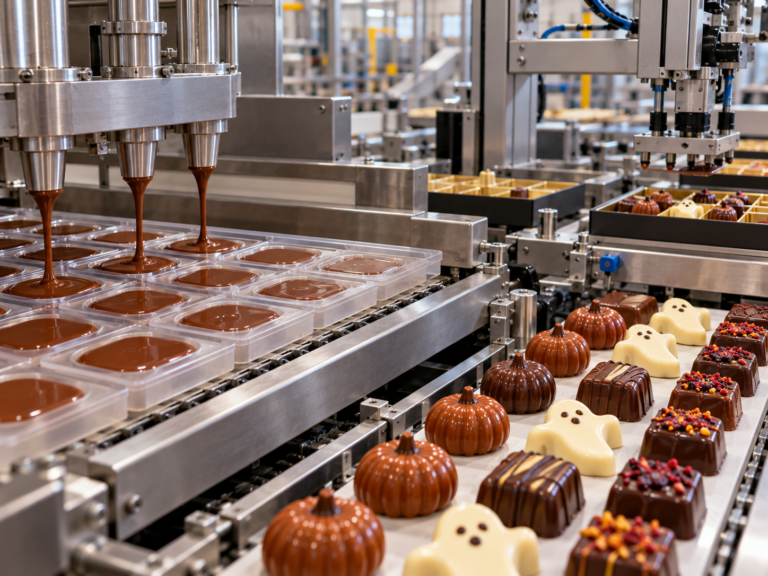
Confectionery is being pulled in two directions at once. Consumers still want comfort and familiarity, but they increasingly expect ‘permissible indulgence’, such as cleaner labels, reduced sugar options, and products that feel functional. At the same time, novelty is accelerating, with premium finishes, seasonal micro-batches, and format-led innovation — from multi-layered and centre-filled designs to new texture combinations — becoming a core way for brands to stay relevant.
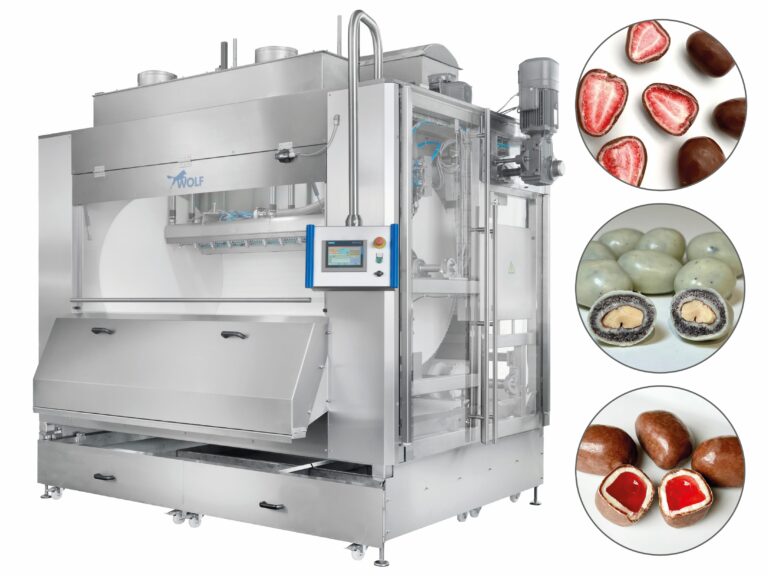
That shifts the challenge for manufacturers from simply scaling volume to one of mastering complexity. Alternative sweeteners, plant-based gelling systems, aeration and layered deposits can all behave differently during processing, so maintaining texture, shape definition and repeatability demands tighter control and more flexible forming and depositing setups that can adapt without sacrificing consistency.
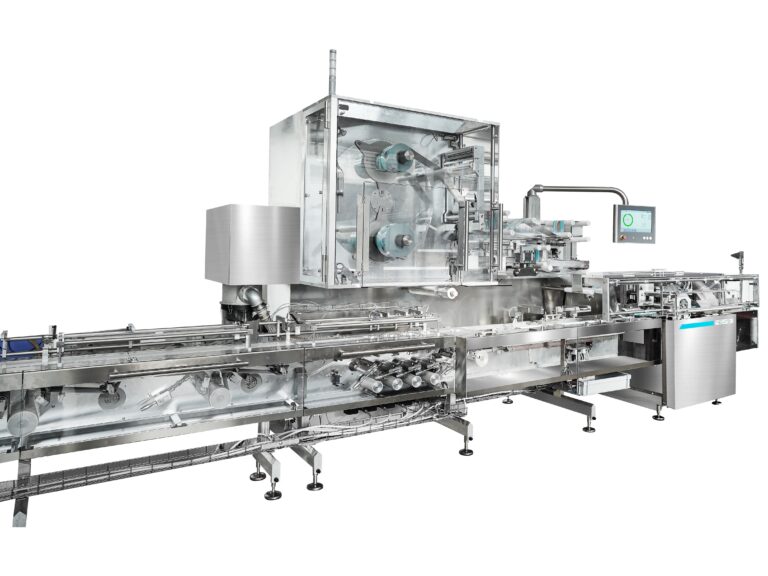
From a packaging perspective, convenience remains a major driver as confectionery continues to perform strongly in portable, on-the-go formats. For TNA, these shifts reinforce the value of taking an integrated approach, where forming, handling, packaging and end-of-line automation are designed to work as one system, so confectionery manufacturers can scale innovation without turning the factory floor into a complex series of patchwork systems.
Automation and digitalisation are transforming production lines. Which innovations do you believe will have the biggest impact on confectionery processing and packaging in the next five years?
The biggest shift will be towards fully connected, recipe-driven lines where kitchen operations, forming or starch moulding, finishing and packaging are treated as a single coordinated system. When the line can communicate end to end, it becomes far easier to protect product consistency and keep throughput stable, even as product portfolios become more complex.
That brings with it a greater operational need for data and quality control. Inline monitoring, smarter controls, and faster feedback loops will increasingly be used to keep key parameters stable and catch defects early. This is particularly important as manufacturers push into multi-component products, functional formulations and higher design complexity.
Finally, the real productivity gains will come from automation that reduces the pain around changeovers. Paired with better upfront line design and commissioning through virtual factory-style planning, and you get a factory that can run more variety with less disruption — which is exactly what the industry is moving towards.