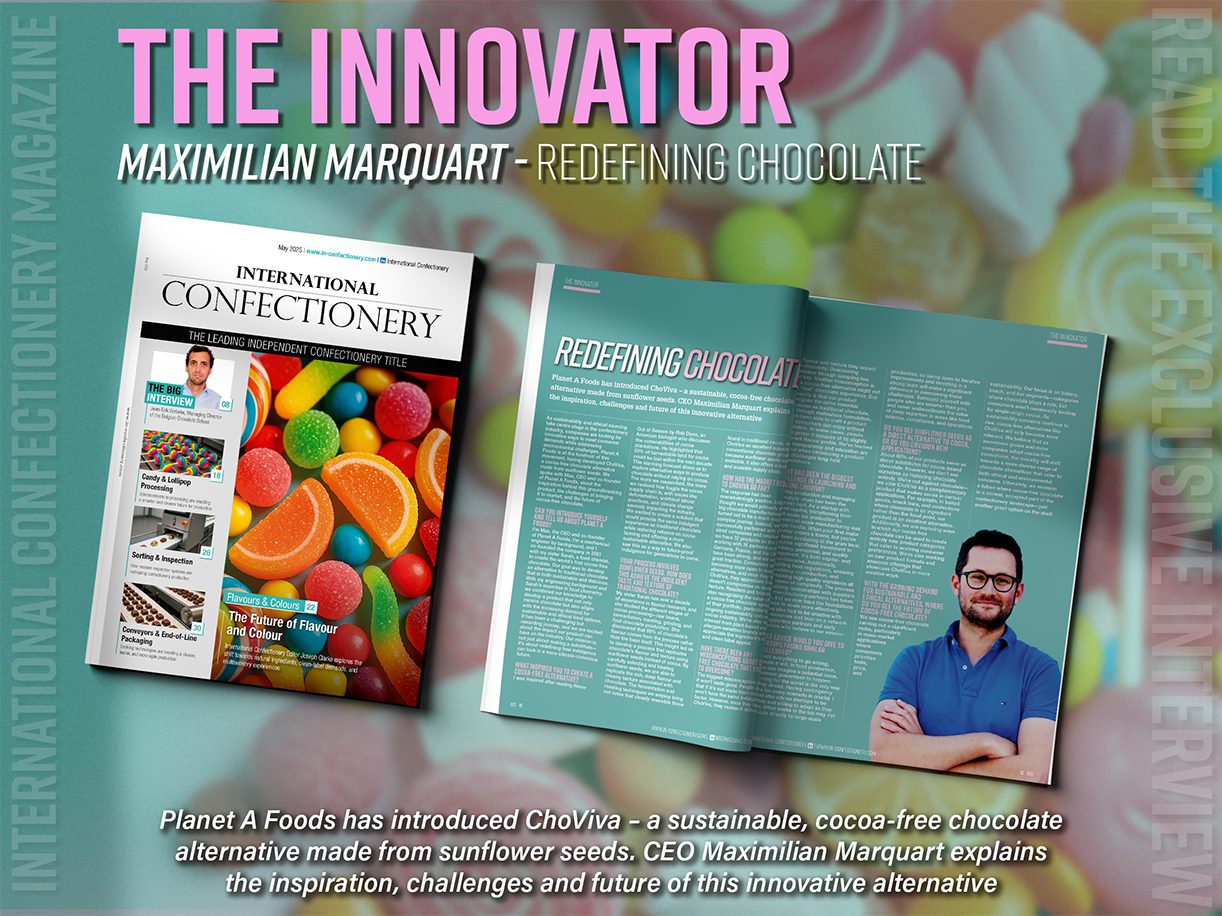

Planet A Foods has introduced ChoViva – a sustainable, cocoa-free chocolate alternative made from sunflower seeds. CEO Maximilian Marquart explains the inspiration, challenges and future of this innovative alternative
As sustainability and ethical sourcing take centre stage in the confectionery industry, companies are looking for innovative ways to meet consumer demands while addressing environmental challenges. Planet A Foods is at the forefront of this movement, having developed ChoViva, a cocoa-free chocolate alternative made from sunflower seeds. We spoke with Max, CEO and co-founder of Planet A Foods, about the inspiration behind this groundbreaking product, the challenges of bringing it to market, and the future of cocoa-free chocolate.
Can you introduce yourself and tell us about Planet A Foods?
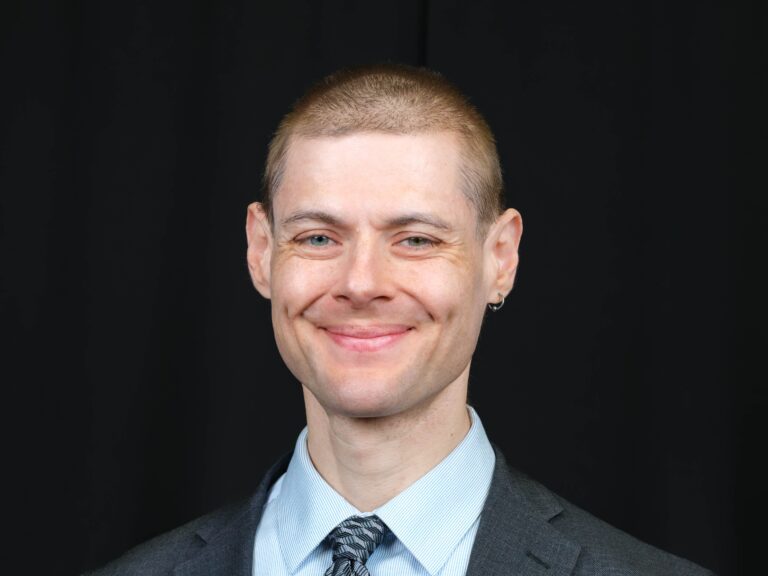
I’m Max, the CEO and co-founder of Planet A Foods. I’m a mechanical engineer by background, and I co-founded the company in 2021 with my sister Sarah, a food chemist, to create the world’s first cocoa-free chocolate. Our goal was to develop an alternative to traditional chocolate that is both sustainable and delicious. With my engineering background and Sarah’s expertise in food chemistry, we combined our knowledge to develop a product that not only mimics chocolate but also aligns with the increasing demand for sustainable and ethical food options. It has been a challenging but rewarding journey, and we are excited about the impact our product can have on the industry. Our mission is not just about making a substitute—it’s about redefining how indulgence can look in a more climate-conscious future.
What inspired you to create a cocoa-free alternative?
I was inspired after reading Never Out of Season by Rob Dunn, an American biologist who discusses the vulnerabilities of cocoa plantations. He highlighted that 50% of harvestable land for cocoa could be lost within the next decade. This alarming forecast drove us to explore alternative ways to produce chocolate without relying on cocoa. The more we researched, the more we realised how fragile the cocoa supply chain is, with issues like deforestation, unethical labour practices, and climate change severely impacting the industry. We wanted to create a solution that would provide the same indulgent experience as traditional chocolate while reducing reliance on cocoa farming and offering a more sustainable alternative. We also saw this as a way to future-proof indulgence for generations to come.
Your process involves sunflower seeds. How does this achieve the indulgent taste and texture of traditional chocolate?
My sister Sarah has over a decade of experience in flavour research, and she studied the different stages of cocoa processing—raw beans, fermentation, roasting, grinding, and final chocolate production. She discovered that 80% of chocolate’s flavour comes from the process rather than the bean itself. This insight led us to develop a process that replicates chocolate’s flavour and texture using sunflower seeds instead of cocoa. By carefully selecting and treating sunflower seeds, we are able to replicate the rich, deep flavour and creamy texture associated with chocolate. The fermentation and roasting techniques we employ bring out notes that closely resemble those found in traditional cocoa, making ChoViva an excellent substitute for conventional chocolate products. And because sunflower seeds are widely available, it also offers a more resilient and scalable supply chain.
How has the market responded to ChoViva so far?
The response has been overwhelmingly positive. Initially, we thought we would primarily sell to the big chocolate manufacturers, but it turned out to be a much more complex journey. Instead, we’ve successfully partnered with medium-sized companies and retailers. So far, we have 32 products on the shelves, working with 16 partners across Germany, France, and the UK. Sales have been strong, and we are seeing great traction. Consumers are becoming more open to sustainable alternatives, and once they try ChoViva, they appreciate that it doesn’t compromise on taste or texture. Retailers and brands are also recognising the value of having a cocoa-free chocolate option as part of their portfolio, particularly given the ongoing sustainability concerns in the cocoa industry. We’re also seeing interest from plant-based and allergen-sensitive brands who appreciate the ingredient’s versatility and clean label appeal.
Have there been any misconceptions about cocoa-free chocolate that you’ve had to overcome?
The biggest misconception is that it won’t taste good. People assume that if it’s not made from cocoa, it won’t have the same indulgence factor. However, once they taste ChoViva, they realise it delivers the rich flavour and texture they expect from chocolate. Overcoming scepticism through sampling has been key. Another misconception is that a cocoa-free alternative might not be a “real” chocolate experience. But the reality is that our product undergoes the same essential processes as traditional chocolate, and through meticulous formulation, we’ve been able to craft a product that consumers can enjoy without hesitation. In some cases, people even prefer it because of its slightly different flavour profile. We’ve learned that transparency and education are critical when introducing a product that challenges long-held expectations.
What has been the biggest challenge in launching and scaling ChoViva?
Scaling production and managing the supply chain has been the toughest part. As a startup with limited capital, transitioning from small-scale lab production to commercial-scale manufacturing was a major hurdle. When your first major customer orders a tonne, but you’ve only been producing at the gram level, it requires significant investment in machinery, personnel, and quality management. It’s both capital- and labour-intensive. Additionally, navigating food regulations, ensuring consistency in production, and maintaining high quality standards all add layers of complexity. The process of building relationships with suppliers and manufacturing partners has taken time, but we now have the foundations in place to scale more effectively. We’ve also had to be creative with our resources and lean on a network of supportive partners and early adopters who believe in our mission.
What advice would you give to startups facing similar challenges?
Expect everything to go wrong, because it will. In food production, if you can imagine a potential issue, it’s almost guaranteed to happen. Planning for the worst is the only way to stay ahead. Having contingency plans for every scenario is crucial. I would also advise startups to be flexible and willing to adapt as they scale. What works in the lab may not translate directly to large-scale production, so being open to iterative improvements and investing in a strong team will make a significant difference in overcoming these challenges. Surround yourself with people who are smarter than you, and never underestimate the value of deep expertise in areas like food science, compliance, and operations.
Read the full interview in our latest issue here