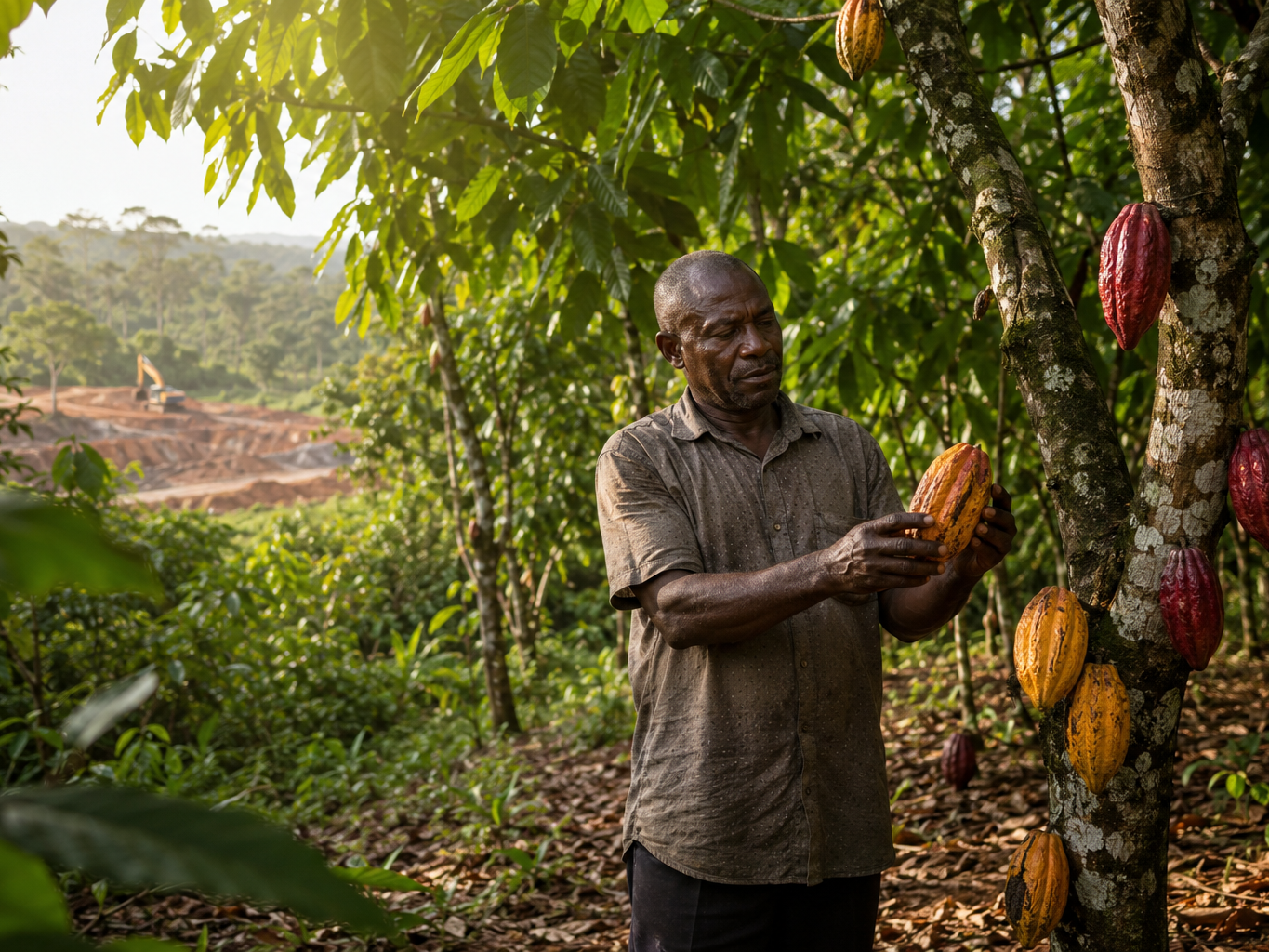

Ghana has moved to tighten protection of its cocoa farms after parliament approved legislation designed to prevent land being diverted to mining and other activities. The Ghana Cocoa Board Bill 2026 establishes a regulatory framework for the country’s cocoa value chain, with measures covering farm protection, farmer income and oversight of an industry important to Ghana’s economy.
What does Ghana’s new cocoa bill mean for farmers?
Under the legislation, cocoa farms would receive protected status, making it a criminal offence to convert them to another use without approval. The provisions are intended principally to curb the loss of cocoa land to illegal gold mining, commonly known locally as galamsey, as well as logging and unregulated development. Penalties could include substantial fines and prison sentences of up to 20 years for serious offences.
The bill also seeks to strengthen farmers’ position within the cocoa economy. It provides for producers to receive a minimum of 70% of the net free-on-board value of cocoa exports. That mechanism is intended to ensure a more predictable share of export earnings reaches growers, although its effect will depend on implementation, production costs and movements in international cocoa markets.
The reforms arrive at a sensitive moment for the global chocolate sector. Ghana is one of the world’s most important cocoa-producing countries, but its output has been affected by ageing trees, disease, adverse weather, smuggling and the encroachment of mining. These pressures have contributed to supply uncertainty and volatile cocoa prices, increasing costs for processors and confectionery manufacturers.
Nevertheless, the restrictions have prompted concern among some farmer representatives. Critics argue that growers invest heavily in acquiring, planting and maintaining their land and should retain greater control over how it is used. There are also questions about whether enforcement will concentrate on illegal mining operators or expose farmers themselves to severe punishment when financial pressures lead them to consider alternative uses.
How could the legislation affect global chocolate and cocoa supplies?
For chocolate and cocoa companies, the development has implications beyond Ghana. If effectively enforced, the bill could help preserve productive farmland and support longer-term supply security. However, lasting improvement will also require investment in farm renewal, disease control, climate resilience, traceability and livelihoods. Protecting cocoa trees alone may not be enough if farming is unable to provide households with a sustainable income.
The legislation has passed parliament but had not received presidential assent when its provisions were reported. Its implementation will therefore be closely watched by cocoa farmers, traders and confectionery manufacturers. The central challenge will be balancing protection of a strategically important crop with the rights and economic realities of the people who grow it.