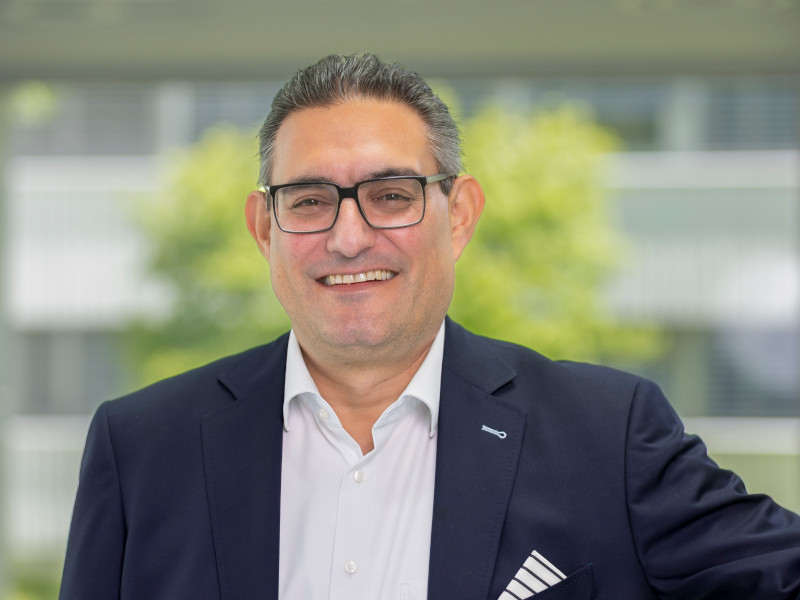

Samuel Schär, CEO, Bühler Group, discusses the growing importance of flexibility, electrification, hygienic design and AI-driven optimisation in food production…
Could you begin by introducing yourself and explaining your journey to becoming CEO of Bühler Group?
I joined Bühler in 2002, so this September I will have been with the company for 24 years. I started my career in a corporate venture focused on nanotechnology. From there, I became Head of the Grinding & Dispersing Business Unit in 2009, where we produced equipment for inks and related applications, including those involving nanoparticles.
In 2013, I joined the Executive Board and took responsibility for the Advanced Materials division. This encompassed Bühler’s non-food businesses, including die casting for aluminium and magnesium, grinding and dispersing technologies, and optical thin-film coating solutions.
Later, in 2020, I assumed the role of Chief Services and Sales Officer for the Group. That position gave me much greater exposure to Bühler’s food businesses and our customers across a range of sectors. I held that role for five years before becoming CEO on January 1st this year.
Looking back, it has been a rewarding journey. I have always enjoyed working at Bühler, and throughout my career I have been fortunate to take on new opportunities whenever they arose.
Flexibility remains a major focus across the food industry. Manufacturers want high output, but they also need production lines that can adapt quickly to changing market demands.
How is this influencing factory investment and production line design?
One of the most important developments is the move towards standardisation and modularisation. Manufacturers increasingly want systems that are not engineered completely from scratch for every project. Instead, they are looking for solutions based on standardised modules that can be assembled and configured according to specific requirements.
This approach allows companies to create highly efficient production lines while maintaining the flexibility to respond to changing consumer demands. When equipment is built from standardised modules, it becomes easier to scale operations, introduce new products, and make adjustments without compromising productivity.
The ability to combine high output with flexibility is becoming increasingly important. Markets are evolving more quickly than ever before, and manufacturers need production systems capable of adapting to those changes.
Is achieving that balance between flexibility and productivity a struggle for manufacturers?
I would not describe it as a struggle; rather, it is an everyday challenge that manufacturers must continuously manage. The nature of that challenge varies depending on the sector.
If we look at the milling industry, for example, which remains Bühler’s largest business serving staple foods, mills have become significantly larger over the past two decades. Twenty years ago, a typical mill might have processed between 150 and 300 tonnes per day. Today, mills with capacities of 750 to 1,000 tonnes per day are increasingly common.
In milling, flexibility is often less about changing production volumes and more about product variety. Some customers may produce only a small range of flour types, while others require a much broader portfolio. The broader the portfolio, the more complex the mill diagram becomes, requiring additional processing steps and equipment.
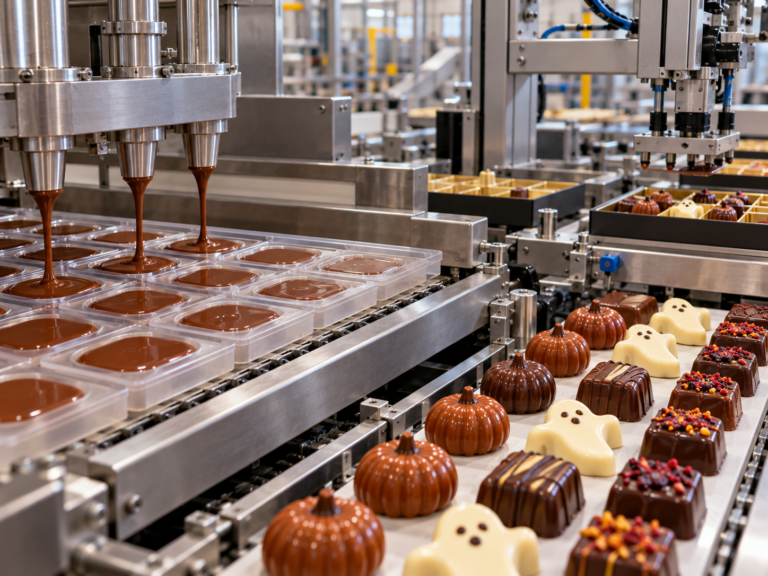
In confectionery, however, the situation is different. Some companies have highly standardised product portfolios and can effectively assemble production solutions like Lego bricks. This gives them a strong competitive advantage because it allows them to operate efficiently and economically. Others are still working towards that level of standardisation, which can limit flexibility and operational efficiency.
Sustainability and energy efficiency are now key priorities throughout food manufacturing…
Where do you see the greatest opportunities for improvement?
The biggest opportunities are found wherever fossil fuels are still being used directly in production processes.
Today, there is often no direct financial disadvantage associated with burning fossil fuels in many markets, but that could change in the future as carbon pricing and environmental regulations evolve. Because of this, we see significant potential in electrification.
In my view, manufacturers should transition from fossil-fuel-based systems to electric technologies powered by renewable energy sources wherever possible. Of course, electrification only delivers its full environmental benefit if the electricity itself comes from renewable sources. Simply shifting emissions from the factory to a power station does not solve the underlying problem.
As consumer expectations around sustainability continue to grow, manufacturers will increasingly need to demonstrate environmental responsibility. Whether driven by consumer demand or regulation, the industry is moving towards lower-carbon production methods.
This is why much of our innovation effort is focused on electrifying traditionally energy-intensive processes. Examples include electric biscuit ovens and electric wafer baking systems. Our recently introduced OptiBake technology, which uses induction heating, demonstrates how manufacturers can improve both energy efficiency and production flexibility at the same time.