Francesco Riva, Director Sales Engineering at CAMA GROUP, discusses how rising demand for variety is reshaping multi-flavour packaging through greater flexibility and automation
Consumer demand for greater choice is reshaping the bakery and confectionery industries, driving manufacturers to rethink how products are packed, presented, and delivered to market. Multi-flavour formats have emerged as a powerful way for brands to offer variety, encourage trial, and create a more engaging consumer experience, but they also introduce new levels of operational complexity across packaging and production lines. As assortment strategies become more sophisticated, manufacturers are under pressure to balance flexibility, efficiency, sustainability, and automation without compromising throughput or product quality. Francesco Riva, Director Sales Engineering at CAMA GROUP, explores how multi-flavour packaging is evolving across global markets and why intelligent line design, material selection, and adaptable automation systems are becoming essential for future-ready production.
Packaging for Variety in a Changing Consumer Market
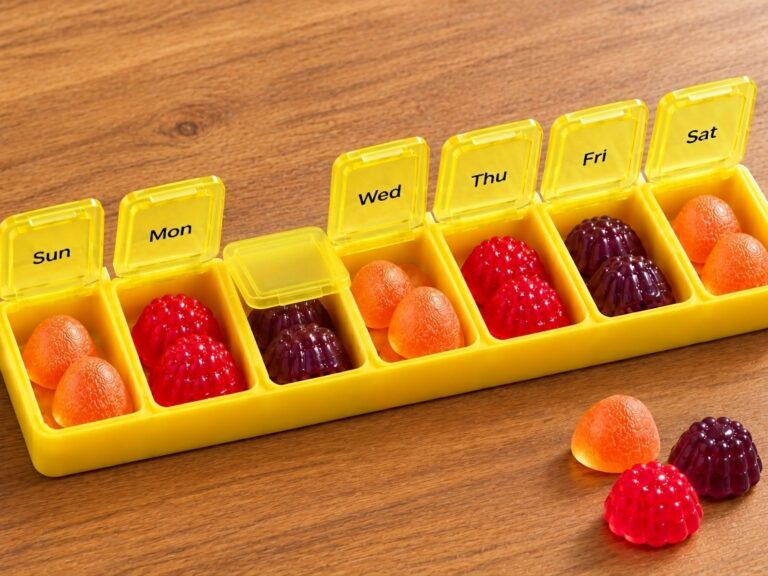
Demand for variety in bakery and confectionery keeps growing because consumers increasingly value novelty, personalisation, and an “experience” that extends beyond taste. Multi-flavour packs meet this expectation by enabling trial and discovery before committing to one. For brands, this changes packaging strategy from launching one flavour at a time to building modular assortments that can be refreshed quickly. Keeping a consistent outer format while varying the internal mix accelerates innovation, reduces changeover time and logistics complexity, and creates a simple way to test the market and refine the assortment based on what shoppers prefer.
How multi-flavour evolves – and how packaging must be engineered – varies by region and channel. In mature Western markets such as the United States, multi-flavour is common across many categories, so brands tend to prioritise standardisation and automation to run repeatable assortments at scale, while still leaving room for promotional and seasonal updates. In parts of Asia, where assortment is often designed to be highly visible and “scenographic,” packs more frequently rely on compartments, dividers, or inserts to keep variants separate and enhance the surprise effect, sometimes supported by more manual or hybrid assembly. In more traditional contexts, including parts of the MENA region, adoption can be slower and single flavour remains dominant, reducing the immediate need for complex assortment formats. Across these differences, the same principle holds multi-flavour wins when packaging balances marketing impact with operational feasibility, so brands can refresh mixes without rebuilding the entire packaging system.
Balancing Variety with Operational Efficiency
Across these regional and channel differences, one pressure is increasingly shaping how multi-flavour packs are conceived: sustainability. Manufacturers must offer variety while cutting materials and waste, so the most effective mindset is design-for-efficiency – deliver variety with the least material, the least empty space, and the highest recyclability possible. In practice, this means right-sizing packs, so they ship “full”, standardising outer formats to limit changeovers and obsolescence, and simplifying structures by prioritising recyclable mono-material, paper-based solutions where feasible. Complexity should be introduced only when it protects product quality; otherwise, it becomes waste.
Reducing waste, however, is not only about the pack; it is an end-to-end system that links format choices, line performance, and internal logistics. Aligning pack design with line capability (fewer components to handle, predictable material behaviour, and fast changeovers) and using traceable inventory and warehouse buffers can prevent stoppages that turn product into scrap.
To make that end-to-end approach work, material selection should follow a disciplined, criteria-based approach because it shapes both sustainability outcomes and how reliably the pack runs at speed. Choosing a mono-material solution versus a multi-material structure depends on the level of protection required, the sealing and forming technologies available, and the constraints that emerge with machine designers and the supply chain. On multi-flavour lines, seemingly small packaging decisions -such as cardboard grade or the use of inserts and dividers – can define system complexity and directly affect throughput, stoppages, and unit cost. If the pack is not optimised for the chosen automation level, handling becomes fragile: jams increase, interventions multiply, and overall efficiency drops. Because many companies expect rapid payback, a method-driven development approach should steer line configuration toward simplification and standardisation, minimising downtime during changeovers and engineering variety in a way that remains sustainable both environmentally and economically.
Why Flexibility and Automation Are Critical to Multi-Flavour Success
Once materials and pack design are aligned with the chosen automation level, the next determinant of economic viability is flexibility. When formats change frequently, multi-flavour may be produced for short runs before the line switches to other products. Flexibility is typically achieved through automation and robotics integrated with line-management systems: primary production can continue in batches, one flavour at a time, while secondary and tertiary packaging select and combine variants into the final carton. A flexible downstream line is what allows different assortments to be managed without turning every format update into a heavy stop.
As flexibility scales to manage more assortments, complexity rises in parallel: as variety counts and combinations increase, operational risk rises, making simulation a practical design tool rather than a nice-to-have. A digital twin allows manufacturers to test the machine, pack format, and composition logic before start-up, highlighting bottlenecks and weak points early and avoiding expensive corrections after production begins. The challenge becomes sharper when assortments are unbalanced – for example, when one flavour is needed in higher quantities than the others. In these cases, variants do not advance at the same pace and certain SKUs must arrive with greater continuity. Simulation helps size and synchronise infeed, assess start-up and transient conditions, and prevent the most penalising scenario: the line waiting because one flavour is missing.
The more connected and coordinated the process, the fewer errors and discontinuities accumulate. Because many plants still run in phases, planning must ensure that all variants are ready at the right time and that stocks are replenished continuously while assortment building and packing are completed. For this reason, design must cover the entire chain: loading and unloading of containers, the manual and automated steps, storage and retrieval logic, and controlled feeding into the packaging phase. Multi-flavour is not simply combining products; it is a coordinated system of handling, buffering, retrieving, and packing.
Read the full exclusive in our latest issue here