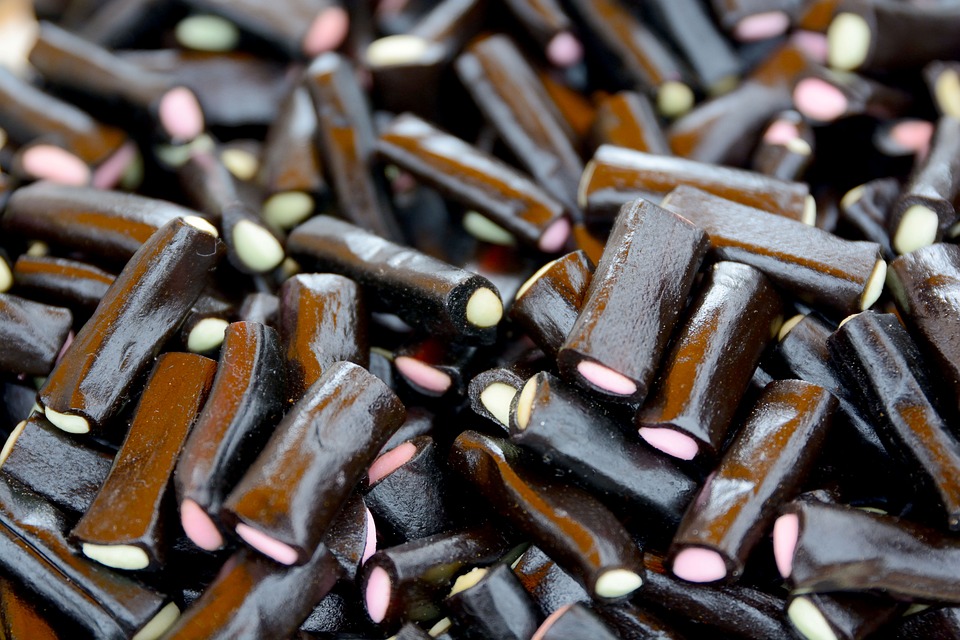

International Confectionery’s Technical Editor Clay Gordon draws parallels between depositing chocolate and extruding liquorice, what considerations there are in the production of both.
On the surface, there are no obvious connections between a new type of depositing head for dosing fixed amounts of chocolate into polycarbonate mould cavities and extruding coloured and flavoured liquorice or fruit purées into continuous ropes. And, truth tell, exploring those connections was not where I thought this article was going to be headed when I set out originally.
So, what are those connections and what can we learn by exploring them?
Manufacturing processes are bound by physical and chemical processes. Changes in viscosity, for example, will affect how substances flow. Viscosity in chocolate is determined in large part by fat content and type, which can be modified by emulsifiers. Viscosity in a liquorice or fruit purée is (where applicable) is dependent upon recipe, moisture, and fibre content modified by thickeners and gelling agents. To some extent flow characteristics are affected by temperature, and pressure also plays a role.
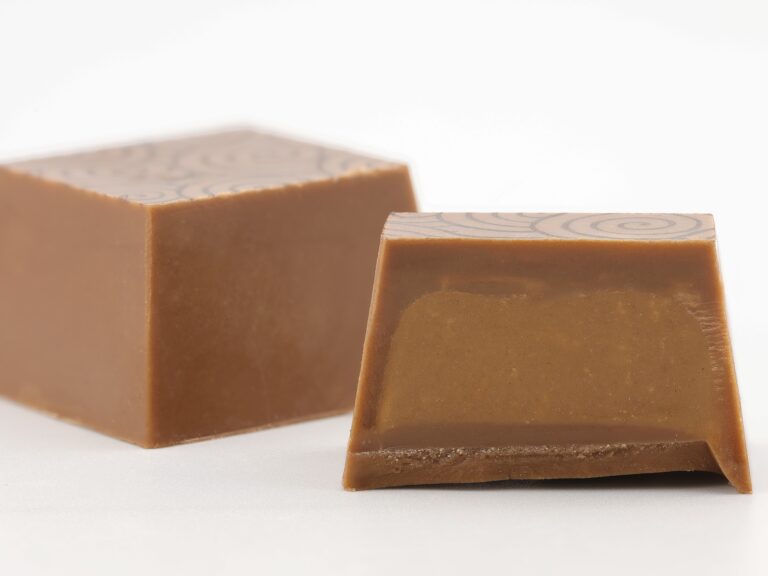
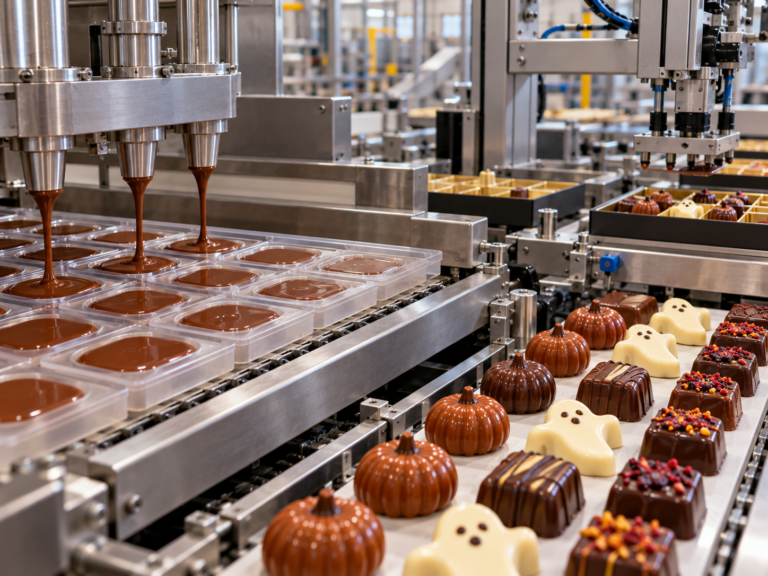
When depositing chocolate into mould cavities there are two basic approaches, one is volumetric and the other is based on time. In a volumetric depositor, a specific volume of chocolate that corresponds to the desired deposit weight is drawn into a cylindrical piston. The piston is then discharged. (It is not actually necessary to deposit into a mould; chocolate chips is one application where moulds are not required.) Once the piston is emptied, it is refilled, and the cycle is repeated. Depositing this way can be extremely precise. So-called one-shot machines capable of depositing two or more different fluids in a carefully timed sequence are examples of volumetric depositors.
In a time-based system – the kind employed by continuous tempering machines from companies like FBM, Gami, and Selmi, among many others – the chocolate being pumped from the working bowl through the tempering pipe by the tempering auger is allowed to flow for a length of time that corresponds to a desired weight. At its most basic level, each mould cavity is filled one at a time – a task that requires some skill to master. The design of the tempering machine and software places other limitations on the depositing process – one of which is the resolution of the timer. This is often one-tenth of a second, which might be over or under the desired weight. One way to address this over/under challenge is to change the rotational speed of the auger.
These challenges are complicated by the fact that the combination of gravity and air pressure apply a downward force to the chocolate in the working bowl that changes as the bowl empties. This change can affect the weight of chocolate flowing through the system during a specified interval. The weight deposited into a mould cavity when the bowl is full may be reduced as the bowl empties...
Read the full feature in our magazine.
Never miss a story… Follow us on:
 International Confectionery
 @InConfectionery
 @InConfectionery
Media contact
Caitlin Gittins
Editor, International Confectionery
Tel: +44 (0) 1622 823 920
Email: [email protected]